- The 2026 NMJL CardThe product published annually by the National Mah Jongg League which dictates the collection of groupings that will form the… More is organized into nine sections of hand types. These sections are:
- 2026 – hands depicted in this section mainly contain groupings of numerical tiles that represent the year the card was issued. Groupings of Flower, Dragon, and Wind tiles are also used in the hands.
- 2468 – hands depicted in this section mainly contain groupings of even numbered numerical tiles.
- Any Like Numbers – hands depicted in this section mainly contain groupings of identical numerical tiles.
- Quints – hands depicted in this section contain at least one Quint grouping.
- Consecutive Run – hands depicted in this section mainly consist of multiple groupings of identical tiles, of the same suit, that are in numerical sequence. Groupings of Flower and Dragon tiles are also used in the hands.
- 13579 – hands depicted in this section mainly contain groupings of odd numbered numerical tiles.
- Winds-Dragons – hands depicted in this section mainly contain groupings of Dragon and/or Wind tiles. Groupings of numerical tiles are also used in the hands.
- 369 – hands depicted in this section mainly contain groupings of 3, 6, and 9 numerical tiles. Groupings of Dragon and Flower tiles are also used in the hands.
- Singles and Pairs – hands depicted in this section mainly contain groupings of numerical tiles in Singles and/or Pairs. Groupings of Flower, Dragon, or Wind tiles are also used in the hands.
- Each section of the NMJL CardThe product published annually by the National Mah Jongg League which dictates the collection of groupings that will form the… More contains multiple lines identifying what groupingsA collection of tiles that consist of identical tiles in different quantities and/or tiles arranged in an aesthetic manner. A winning… More create a winning Mah Jongg hand. When discussing specific NMJL CardThe product published annually by the National Mah Jongg League which dictates the collection of groupings that will form the… More hands, the hand being discussed is identified by the Section Name and Line Number (i.e. 2468 Line 3). Sometimes the NMJL CardThe product published annually by the National Mah Jongg League which dictates the collection of groupings that will form the… More will identify two different hands on the same line. In instances where this occurs, the two options are identified by an “A” or “B” when discussing a specific hand (i.e. 2468 Line 1A or 2468 Line1B).
- The NMJL CardThe product published annually by the National Mah Jongg League which dictates the collection of groupings that will form the… More hands consist of various groupingsA collection of tiles that consist of identical tiles in different quantities and/or tiles arranged in an aesthetic manner. A winning… More of 14 tiles with each hand belonging to one of the nine sections of hands.
- The NMJL CardThe product published annually by the National Mah Jongg League which dictates the collection of groupings that will form the… More hands can be depicted using one, two, or three colors (Blue, Green, and Red). Each color represents a different suit however each color is not specific to any one suit.
- The NMJL CardThe product published annually by the National Mah Jongg League which dictates the collection of groupings that will form the… More hands consist of the following numbers and/or letters:
- 1 – numerical tile 1, 1 Bam or 1 Crak or 1 Dot
- 2 – numerical tile 2, 2 Bam or 2 Crak or 2 Dot
- 3 – numerical tile 3, 3 Bam or 3 Crak or 3 Dot
- 4 – numerical tile 4, 4 Bam or 4 Crak or 4 Dot
- 5 – numerical tile 5, 5 Bam or 5 Crak or 5 Dot
- 6 – numerical tile 6, 6 Bam or 6 Crak or 6 Dot
- 7 – numerical tile 7, 7 Bam or 7 Crak or 7 Dot
- 8 – numerical tile 8, 8 Bam or 8 Crak or 8 Dot
- 9 – numerical tile 9, 9 Bam or 9 Crak or 9 Dot
- 0 – White DragonOne of three types of dragon tiles. The White Dragon tile is typically engraved with a rectangle outlining the edge of… More
- F – FlowerThe Flower tiles are typically engraved with images of flowers. Flower tiles may be engraved with numbers however in American Mah… More tile
- N – North WindOne of the four wind tiles. The North Wind tile is typically engraved with a “N” and the Chinese character for… More tile
- E – East WindOne of the four wind tiles. The East Wind tile is typically engraved with a “E” and the Chinese character for… More tile
- W – West WindOne of the four wind tiles. The West Wind tile is typically engraved with a “W” and the Chinese character for… More tile
- S – South WindOne of the four wind tiles. The South Wind tile is typically engraved with a “S” and the Chinese character for… More tile
- D – Dragon tile, Red DragonOne of three types of dragon tiles. The Red Dragon tile is typically engraved with a red symbol representing a red… More, Green DragonOne of three types of dragon tiles. The Green Dragon tile is typically engraved with a green symbol representing a green… More, or White DragonOne of three types of dragon tiles. The White Dragon tile is typically engraved with a rectangle outlining the edge of… More
- The NMJL CardThe product published annually by the National Mah Jongg League which dictates the collection of groupings that will form the… More always depicts Flower tiles (F), Wind tiles (N, E, W, S), and “0” (White Dragon tile used specifically as a zero) using the color Blue however these tiles are suitless and do not belong to any specific suit.
- Dragon tiles are associated with a specific suits:
- Red DragonOne of three types of dragon tiles. The Red Dragon tile is typically engraved with a red symbol representing a red… More belongs to the CrakOne of the three suit tiles used in American Mah Jongg.The Crak tiles are typically engraved with the Chinese character… More suit
- Green DragonOne of three types of dragon tiles. The Green Dragon tile is typically engraved with a green symbol representing a green… More belongs to the BamOne of the three suit tiles used in American Mah Jongg.The Bam tiles are typically engraved with the bamboo sticks… More suit
- White DragonOne of three types of dragon tiles. The White Dragon tile is typically engraved with a rectangle outlining the edge of… More belongs to the DotOne of the three suit tiles used in American Mah Jongg. The Dot tiles are typically shown with the number of… More suit
- When the White DragonOne of three types of dragon tiles. The White Dragon tile is typically engraved with a rectangle outlining the edge of… More is used as a Zero (“0”), the White DragonOne of three types of dragon tiles. The White Dragon tile is typically engraved with a rectangle outlining the edge of… More is no longer associated with the DotOne of the three suit tiles used in American Mah Jongg. The Dot tiles are typically shown with the number of… More suit and is considered suitlessAn American Mah Jongg tile that is not directly associated with one of the three suits (Bam, Crak, or Dot). Typically,… More.
- A White DragonOne of three types of dragon tiles. The White Dragon tile is typically engraved with a rectangle outlining the edge of… More, used as a Zero, can not be used in a consecutive run.
- The NMJL CardThe product published annually by the National Mah Jongg League which dictates the collection of groupings that will form the… More uses three colors (Blue, Green, and Red) on the card to indicate when different suits must be used in a specific hand. The color-coding never dictates which suit must be used.
- If a NMJL CardThe product published annually by the National Mah Jongg League which dictates the collection of groupings that will form the… More hand is shown in only one color, the numbers (1-9) and any D (Dragon tiles) shown in the NMJL CardThe product published annually by the National Mah Jongg League which dictates the collection of groupings that will form the… More hand must consist of tiles all from one suit. The player can decide on which suit will be used to represent the one color.
- If a NMJL CardThe product published annually by the National Mah Jongg League which dictates the collection of groupings that will form the… More hand is shown in two colors, the numbers (1-9) and any D (Dragon tiles) shown in the NMJL CardThe product published annually by the National Mah Jongg League which dictates the collection of groupings that will form the… More hand must consist of tiles from two suits. The groupingsA collection of tiles that consist of identical tiles in different quantities and/or tiles arranged in an aesthetic manner. A winning… More shown in the same color must be represented by the same suit when the player makes the hand. The player can decide on which two suits will represent the two colors.
- If a NMJL CardThe product published annually by the National Mah Jongg League which dictates the collection of groupings that will form the… More hand is shown in three colors, the numbers (1-9) and any D (Dragon tiles) shown in the NMJL CardThe product published annually by the National Mah Jongg League which dictates the collection of groupings that will form the… More hand must consist of tiles from all three suits. The groupingsA collection of tiles that consist of identical tiles in different quantities and/or tiles arranged in an aesthetic manner. A winning… More shown in the same color must be represented by the same suit when the player makes the hand. The player can decide on which suit will represent each color.
- If a NMJL CardThe product published annually by the National Mah Jongg League which dictates the collection of groupings that will form the… More hand has parenthetical words following the depicted hand, these parentheticals always overrule the color-coding or letters shown.
- If a NMJL CardThe product published annually by the National Mah Jongg League which dictates the collection of groupings that will form the… More hand has “only” in the parenthetical words, the word “only” does not indicate that JokerThe Joker tiles are typically engraved with the word “Joker” and a symbol indicating that this tile is special.Joker tiles… More tiles are not allowed. The word “only” is indicating that only the tiles depicted can be used to complete the hand.
- If a NMJL CardThe product published annually by the National Mah Jongg League which dictates the collection of groupings that will form the… More hand has “Any Like Nos” in the parenthetical words, the hand is depicted with one number (usually a “1”) however the hand can be completed with any like numerical tiles (1-9).
- If a NMJL CardThe product published annually by the National Mah Jongg League which dictates the collection of groupings that will form the… More hand has “Any Wind” in the parenthetical words, the hand is depicted with one Wind tile however the hand can be completed with any Wind tile (N, E, W, or S).
- If a NMJL CardThe product published annually by the National Mah Jongg League which dictates the collection of groupings that will form the… More hand has “Any 2 Non-Matching Nos” in the parenthetical words, the hand is depicted with two non-matching numbers however the hand can be completed with any numerical tiles that do not match.
- If a NMJL CardThe product published annually by the National Mah Jongg League which dictates the collection of groupings that will form the… More hand has “Any 2 Consec Nos” in the parenthetical words, the hand is depicted with two consecutive numbers; however the hand can be completed with any two numerical tiles that are consecutive.
- If a NMJL CardThe product published annually by the National Mah Jongg League which dictates the collection of groupings that will form the… More hand has “Any 3 Consec Nos” in the parenthetical words, the hand is depicted with three consecutive numbers; however the hand can be completed with any three numerical tiles that are consecutive.
- If a NMJL CardThe product published annually by the National Mah Jongg League which dictates the collection of groupings that will form the… More hand has “Any 4 Consec Nos” in the parenthetical words, the hand is depicted with four consecutive numbers; however the hand can be completed with any four numerical tiles that are consecutive.
- If a NMJL CardThe product published annually by the National Mah Jongg League which dictates the collection of groupings that will form the… More hand has “Any 5 Consec Nos” in the parenthetical words, the hand is depicted with five consecutive numbers; however the hand can be completed with any five numerical tiles that are consecutive.
- If a NMJL CardThe product published annually by the National Mah Jongg League which dictates the collection of groupings that will form the… More hand has “These Nos Only” in the parenthetical words, the hand must be completed with the exact numerical tiles as shown on the NMJL CardThe product published annually by the National Mah Jongg League which dictates the collection of groupings that will form the… More.
- If a NMJL CardThe product published annually by the National Mah Jongg League which dictates the collection of groupings that will form the… More hand has “Matching Dragons” in the parenthetical words, the hand must be completed with the Dragon tile associated with the suit being used for that specific color.
- If a NMJL CardThe product published annually by the National Mah Jongg League which dictates the collection of groupings that will form the… More hand has “Opp Dragons” in the parenthetical words, the hand must be completed with a Dragon tile not associated with the suit being used for that specific color.
- If a NMJL CardThe product published annually by the National Mah Jongg League which dictates the collection of groupings that will form the… More hand has “Any 2 Dragons” in the parenthetical words, the hand can be completed with any 2 of the 3 Dragon types.
- If a NMJL CardThe product published annually by the National Mah Jongg League which dictates the collection of groupings that will form the… More hand has “Any 3 Dragons” in the parenthetical words, the hand must be completed with all three Dragon tile types.
- The NMJL CardThe product published annually by the National Mah Jongg League which dictates the collection of groupings that will form the… More also depicts SingleA grouping that consists of one individual tile. A Joker tile can not be used to represent this individual tile. More and/or PairA grouping that consists of two identical tiles. A Joker tile can not be used to represent either one or both… More groupingsA collection of tiles that consist of identical tiles in different quantities and/or tiles arranged in an aesthetic manner. A winning… More together for aesthetic purposes only. While these groupingsA collection of tiles that consist of identical tiles in different quantities and/or tiles arranged in an aesthetic manner. A winning… More may look like a unique PairA grouping that consists of two identical tiles. A Joker tile can not be used to represent either one or both… More, PungA grouping that consists of three identical tiles. Joker tiles are allowed and up to three Joker tiles can be used… More, KongA grouping that consists of four identical tiles. Joker tiles are allowed and up to four Joker tiles can be used… More, QuintA grouping that consists of five identical tiles. Joker tiles are allowed and up to five Joker tiles can be used… More, or SextetA grouping that consists of six identical tiles. Joker tiles are allowed and up to six Joker tiles can be used… More they are not and they must abide by the SingleA grouping that consists of one individual tile. A Joker tile can not be used to represent this individual tile. More and PairA grouping that consists of two identical tiles. A Joker tile can not be used to represent either one or both… More rules. Some examples of these unique groupingsA collection of tiles that consist of identical tiles in different quantities and/or tiles arranged in an aesthetic manner. A winning… More from the 2024 NMJL CardThe product published annually by the National Mah Jongg League which dictates the collection of groupings that will form the… More are:
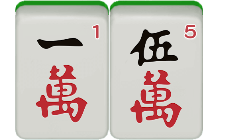
- 15 – this is not a PairA grouping that consists of two identical tiles. A Joker tile can not be used to represent either one or both… More but instead is a visual appeal groupingA collection of tiles that consist of identical tiles in different quantities and/or tiles arranged in an aesthetic manner. A winning… More of Two SinglesA grouping that consists of two different tiles (two Single groupings) that are shown grouped together on the NMJL Card… More
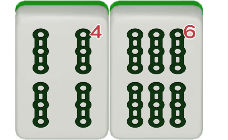
- 46 – this is not a PairA grouping that consists of two identical tiles. A Joker tile can not be used to represent either one or both… More but instead is a visual appeal groupingA collection of tiles that consist of identical tiles in different quantities and/or tiles arranged in an aesthetic manner. A winning… More of Two SinglesA grouping that consists of two different tiles (two Single groupings) that are shown grouped together on the NMJL Card… More
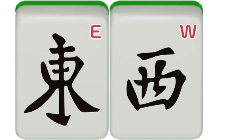
- EW – this is not a PairA grouping that consists of two identical tiles. A Joker tile can not be used to represent either one or both… More but instead is a visual appeal groupingA collection of tiles that consist of identical tiles in different quantities and/or tiles arranged in an aesthetic manner. A winning… More of Two SinglesA grouping that consists of two different tiles (two Single groupings) that are shown grouped together on the NMJL Card… More
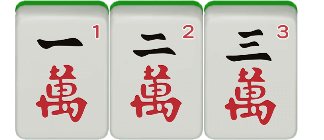
- 123 – this is not a PungA grouping that consists of three identical tiles. Joker tiles are allowed and up to three Joker tiles can be used… More but instead is a visual appeal groupingA collection of tiles that consist of identical tiles in different quantities and/or tiles arranged in an aesthetic manner. A winning… More of Three SinglesA grouping that consists of three different tiles (three Single groupings) that are shown grouped together on the NMJL Card… More
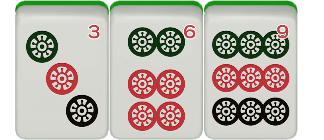
- 369 – this is not a PungA grouping that consists of three identical tiles. Joker tiles are allowed and up to three Joker tiles can be used… More but instead is a visual appeal groupingA collection of tiles that consist of identical tiles in different quantities and/or tiles arranged in an aesthetic manner. A winning… More of Three SinglesA grouping that consists of three different tiles (three Single groupings) that are shown grouped together on the NMJL Card… More
- 2024 – this is not a KongA grouping that consists of four identical tiles. Joker tiles are allowed and up to four Joker tiles can be used… More but instead is a visual appeal groupingA collection of tiles that consist of identical tiles in different quantities and/or tiles arranged in an aesthetic manner. A winning… More of Four SinglesA grouping that consists of four different tiles (four Single groupings) that are shown grouped together on the NMJL Card… More

- NEWS – this is not a KongA grouping that consists of four identical tiles. Joker tiles are allowed and up to four Joker tiles can be used… More but instead is a visual appeal groupingA collection of tiles that consist of identical tiles in different quantities and/or tiles arranged in an aesthetic manner. A winning… More of Four SinglesA grouping that consists of four different tiles (four Single groupings) that are shown grouped together on the NMJL Card… More

- 112 – this is not a PungA grouping that consists of three identical tiles. Joker tiles are allowed and up to three Joker tiles can be used… More but instead is a visual appeal groupingA collection of tiles that consist of identical tiles in different quantities and/or tiles arranged in an aesthetic manner. A winning… More of a PairA grouping that consists of two identical tiles. A Joker tile can not be used to represent either one or both… More and a SingleA grouping that consists of one individual tile. A Joker tile can not be used to represent this individual tile. More

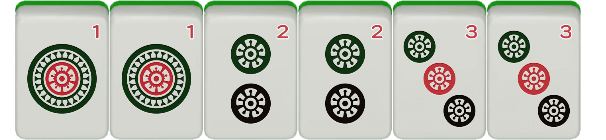
- 11223 – this is not a QuintA grouping that consists of five identical tiles. Joker tiles are allowed and up to five Joker tiles can be used… More but instead is a visual appeal groupingA collection of tiles that consist of identical tiles in different quantities and/or tiles arranged in an aesthetic manner. A winning… More of Two PairA grouping that consists of two identical tiles. A Joker tile can not be used to represent either one or both… More and a SingleA grouping that consists of one individual tile. A Joker tile can not be used to represent this individual tile. More
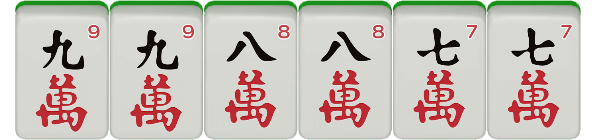
- 998877 – this is not a SextetA grouping that consists of six identical tiles. Joker tiles are allowed and up to six Joker tiles can be used… More but instead is a visual appeal groupingA collection of tiles that consist of identical tiles in different quantities and/or tiles arranged in an aesthetic manner. A winning… More of Three PairA grouping that consists of Three Pair groupings, of the same suit, that are shown grouped together on the NMJL… More
- 15 – this is not a PairA grouping that consists of two identical tiles. A Joker tile can not be used to represent either one or both… More but instead is a visual appeal groupingA collection of tiles that consist of identical tiles in different quantities and/or tiles arranged in an aesthetic manner. A winning… More of Two SinglesA grouping that consists of two different tiles (two Single groupings) that are shown grouped together on the NMJL Card… More
- Each hand on the NMJL CardThe product published annually by the National Mah Jongg League which dictates the collection of groupings that will form the… More is assigned a value and this value is used by the player who claims Mah Jongg to calculate how much each player should pay them for the winning handWhen a player has 14 tiles arranged in groupings that match one of the hands displayed on the current National… More.
- Each hand on the NMJL CardThe product published annually by the National Mah Jongg League which dictates the collection of groupings that will form the… More is designated as either an Exposed HandOne of the two types of hands displayed on the current National Mah Jongg League (NMJL) Card and marked with… More (X) or Concealed HandOne of the two types of hands displayed on the current National Mah Jongg League (NMJL) Card and marked with… More (C).
- A player playing an Exposed HandOne of the two types of hands displayed on the current National Mah Jongg League (NMJL) Card and marked with… More (X) can claim any discarded tile (except JokerThe Joker tiles are typically engraved with the word “Joker” and a symbol indicating that this tile is special.Joker tiles… More) to make a valid exposureWhen a player places a grouping of three or more identical tiles on the top part of their rack after… More prior to declaring Mah Jongg. A valid exposureWhen a player places a grouping of three or more identical tiles on the top part of their rack after… More prior to Mah Jongg is a PungA grouping that consists of three identical tiles. Joker tiles are allowed and up to three Joker tiles can be used… More, KongA grouping that consists of four identical tiles. Joker tiles are allowed and up to four Joker tiles can be used… More, QuintA grouping that consists of five identical tiles. Joker tiles are allowed and up to five Joker tiles can be used… More, or SextetA grouping that consists of six identical tiles. Joker tiles are allowed and up to six Joker tiles can be used… More. A player does not need to expose any tiles prior to the declaring Mah Jongg; however the player is allowed when playing an Exposed HandOne of the two types of hands displayed on the current National Mah Jongg League (NMJL) Card and marked with… More (X).
- A player playing a Concealed HandOne of the two types of hands displayed on the current National Mah Jongg League (NMJL) Card and marked with… More (C) can claim any discarded tile (except a JokerThe Joker tiles are typically engraved with the word “Joker” and a symbol indicating that this tile is special.Joker tiles… More) only to declare Mah Jongg. No portion of the hand may be exposed until the player declares Mah Jongg.
- In American Mah Jongg, the NMJL CardThe product published annually by the National Mah Jongg League which dictates the collection of groupings that will form the… More has hands consisting of consecutive runs which consists of multiple groupingsA collection of tiles that consist of identical tiles in different quantities and/or tiles arranged in an aesthetic manner. A winning… More (SingleA grouping that consists of one individual tile. A Joker tile can not be used to represent this individual tile. More, PairA grouping that consists of two identical tiles. A Joker tile can not be used to represent either one or both… More, PungA grouping that consists of three identical tiles. Joker tiles are allowed and up to three Joker tiles can be used… More, or KongA grouping that consists of four identical tiles. Joker tiles are allowed and up to four Joker tiles can be used… More) of identical tiles, of the same suit, with the groupingsA collection of tiles that consist of identical tiles in different quantities and/or tiles arranged in an aesthetic manner. A winning… More in increasing numerical sequence.
- Consecutive Run examples (not a complete winning handWhen a player has 14 tiles arranged in groupings that match one of the hands displayed on the current National… More):
 1 Dot Pung, 2 Dot Pair, 3 Dot Kong
5 Crak Single, 6 Crak Pair, 7 Crak Kong
3 Bam Quint, 4 Bam Pair, 5 Bam Quint
- Consecutive Run examples (not a complete winning handWhen a player has 14 tiles arranged in groupings that match one of the hands displayed on the current National… More):
- Home
- About
- How to Play
- Identifying East
- Shuffle & Build the Wall
- Serving & Breaking the Wall
- Dealing Tiles
- Organizing Your Hand
- The Charleston
- Start of the Game
- Playing the Game
- Claim Discarded Tile
- Dead Hand
- Jokers & Joker Exchange
- Mah Jongg in Error
- Mah Jongg, Self-Pick
- Mah Jongg, Discarded Tile
- Mah Jongg, Joker Exchange
- Hand Value & Payment
- Game Completion
- Seat Rotation
- Player Count Adjustments
- Supplemental Guidance
- 2026 Card
- Glossary
- Audiobook
- FAQs