
Frequently Asked Questions (FAQs)
General Gameplay
What is Racking a Tile and is racking required?
Alright, let’s talk RackingThe action of a player placing a tile on the sloping side of the player’s rack. This action is complete (finished)… More — what it is, when it’s required, and whether that little tile tap on the rack counts (spoiler alert: it doesn’t!).
So, what’s Racking?
It’s simply when you place a tile on the sloping side of your rack. And here’s the key — RackingThe action of a player placing a tile on the sloping side of the player’s rack. This action is complete (finished)… More is officially done once the tile is fully seated and your fingers are off the tile. That’s when the RackingThe action of a player placing a tile on the sloping side of the player’s rack. This action is complete (finished)… More action is complete.
Is it required every turn?
Not necessarily! You don’t have to rack a tile if you’re making a move right away. Once you pick a tile from the wall, you can close that Window of OpportunityThe period of time where a discarded tile can be claimed by another player. The period of time to claim a… More by doing one of the following:
- Discard that picked tile immediately
- Declare Mah Jongg if it’s your winning tile (yay!)
- Initiate a Joker ExchangeAn action that a player may perform when it is their turn to play that allows a player to trade… More
But here’s the thing — if you don’t rack your tile and you’re not doing one of those three actions, that Window of OpportunityThe period of time where a discarded tile can be claimed by another player. The period of time to claim a… More stays wide open. That means any other player can still swoop in and claim the most recently discarded tile. Until you officially rack, discard, declare Mah Jongg, or make a Joker ExchangeAn action that a player may perform when it is their turn to play that allows a player to trade… More, it’s fair game!
And what if you want to discard a different tile?
No problem — but there’s a rule for that! If you decide not to discard the tile you just picked from the wall and want to discard a different tile instead, you have to rack the picked tile first. Once it’s settled on the sloping part of your rack, you’re free to choose any other tile to discard.
And what about tapping the rack?
That little tap or click on the rack with your tile? Doesn’t count. It’s just a nervous habit or maybe a power move (wink!), but it has zero effect on the game. Only full-on RackingThe action of a player placing a tile on the sloping side of the player’s rack. This action is complete (finished)… More closes the window.
When is Racking actually required?
- At the start of the game. After tiles are dealt, all players should rack their tiles to get organized for the Charleston.
- When you want to discard a tile from your rack instead of the tile you just picked. RackingThe action of a player placing a tile on the sloping side of the player’s rack. This action is complete (finished)… More is non-negotiable in this case — no shortcuts!
So, rack it when you need to, skip it when you don’t, but remember — if you’re keeping that window open, stay sharp! Anyone could jump in and claim that last discard tile. Keep it fair, keep it fun, and play like a pro!
Do all actions go in a counterclockwise direction in American Mah Jongg?
Let’s clear up any confusion about which direction things move in American Mah Jongg. Most actions go counterclockwise — that’s right, to the right!
Counterclockwise Actions
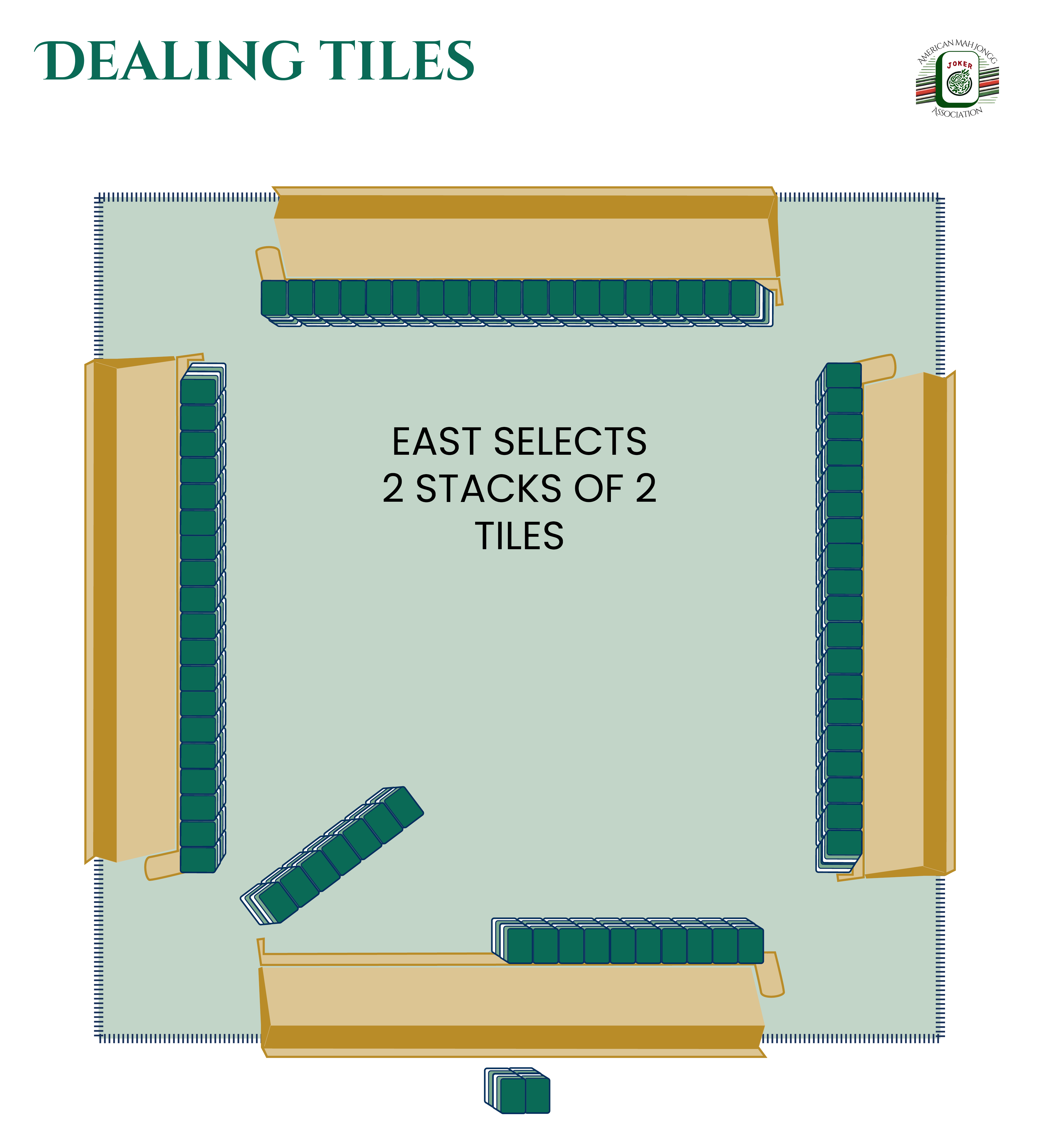
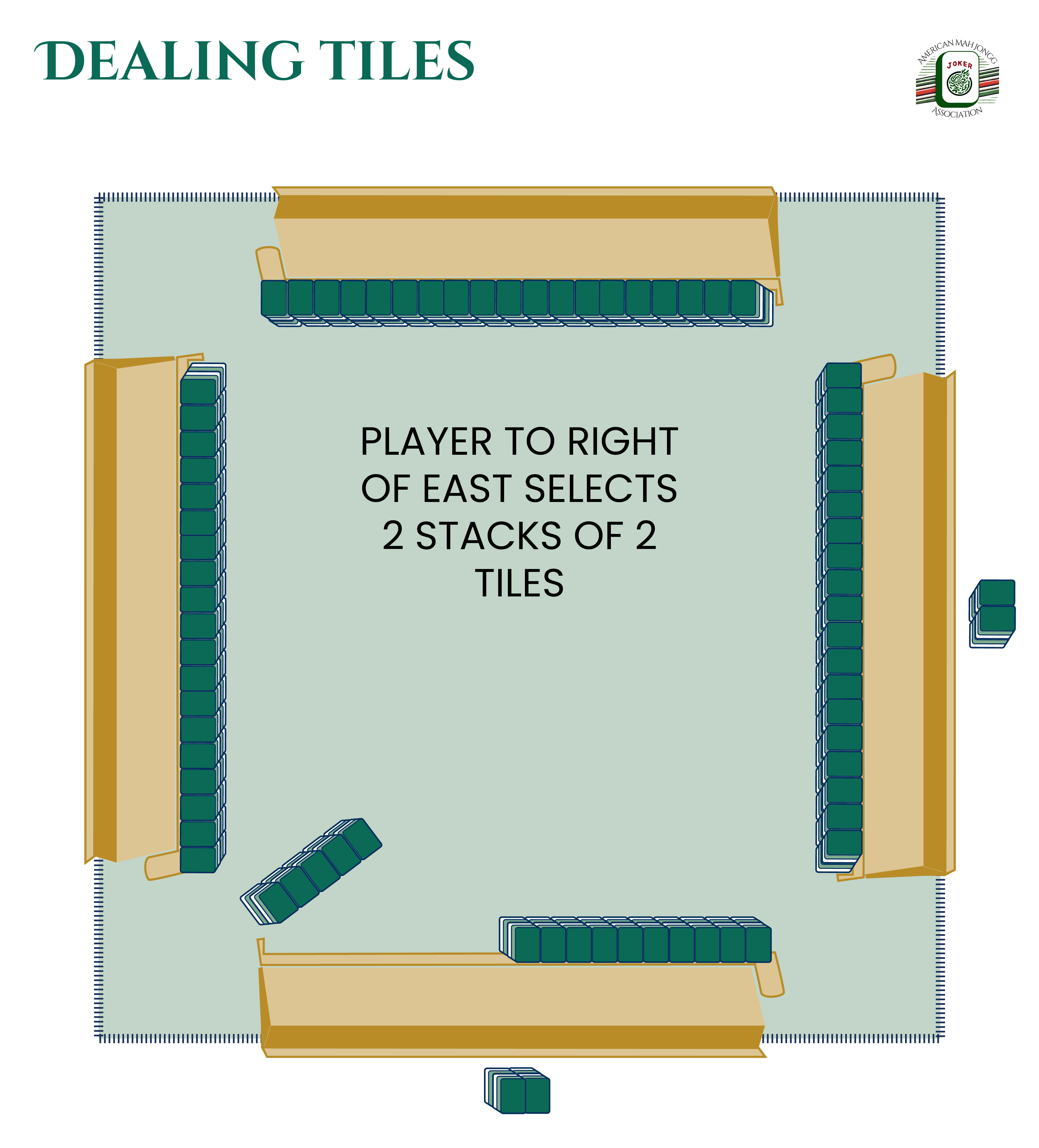
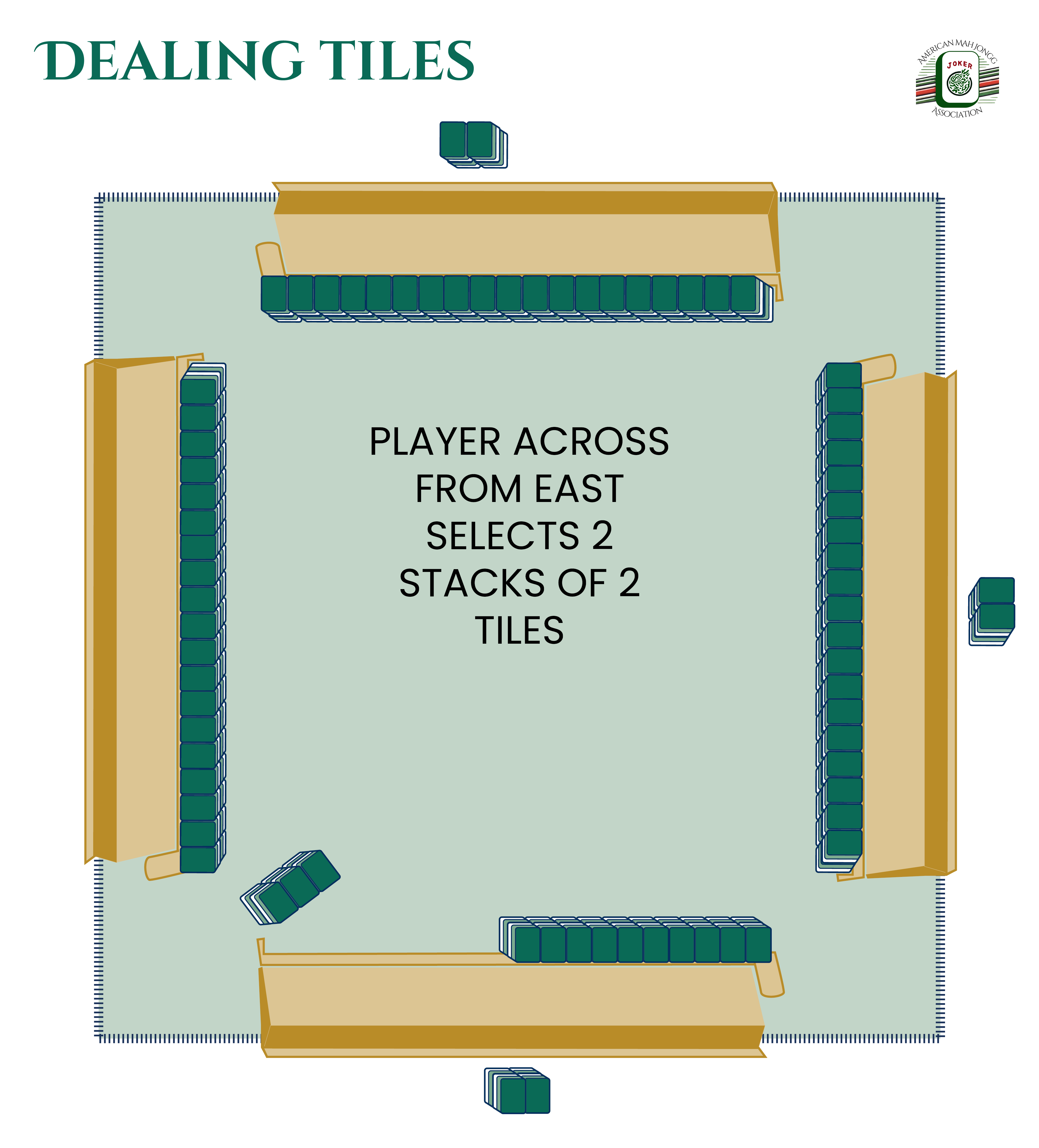
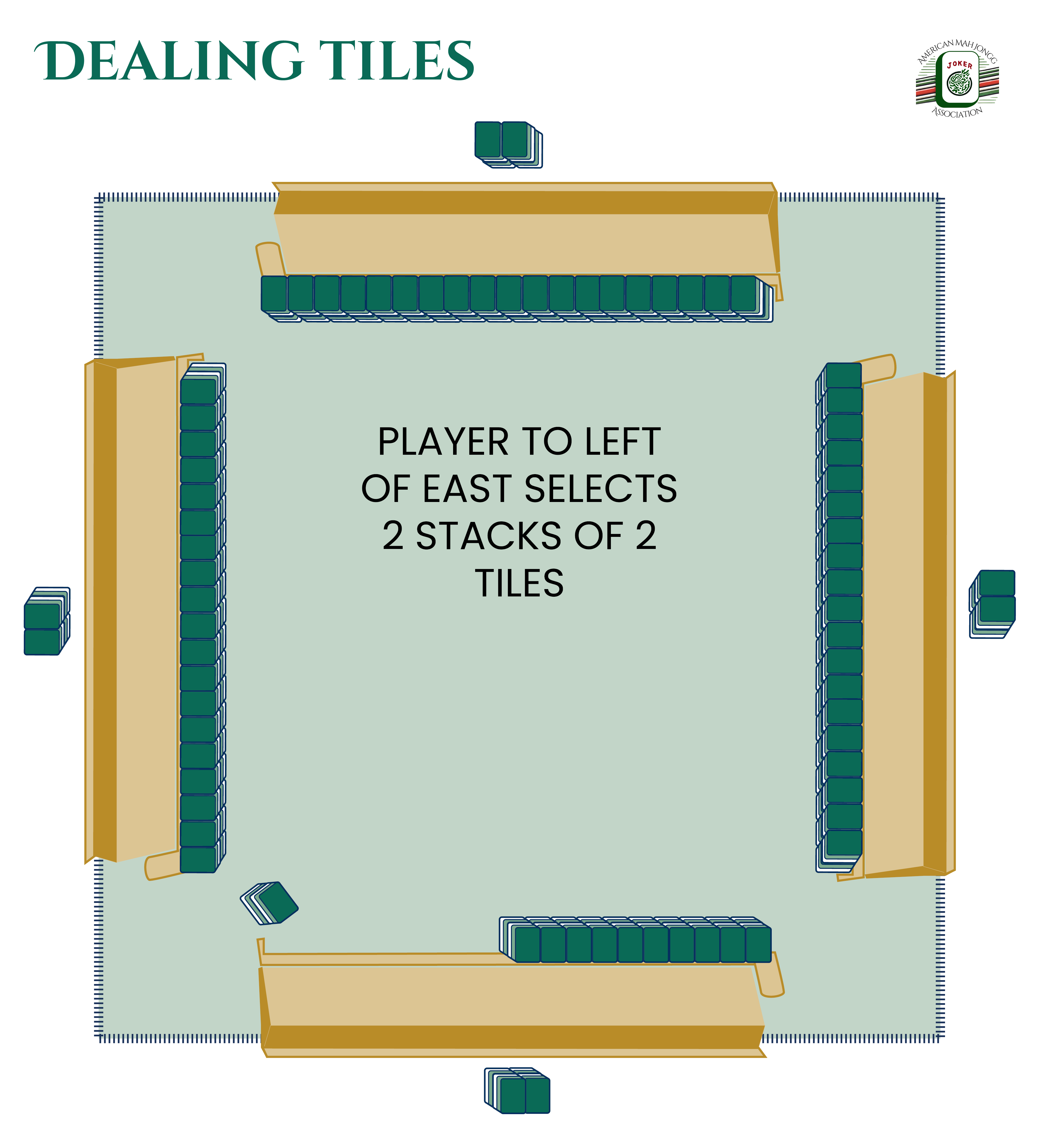
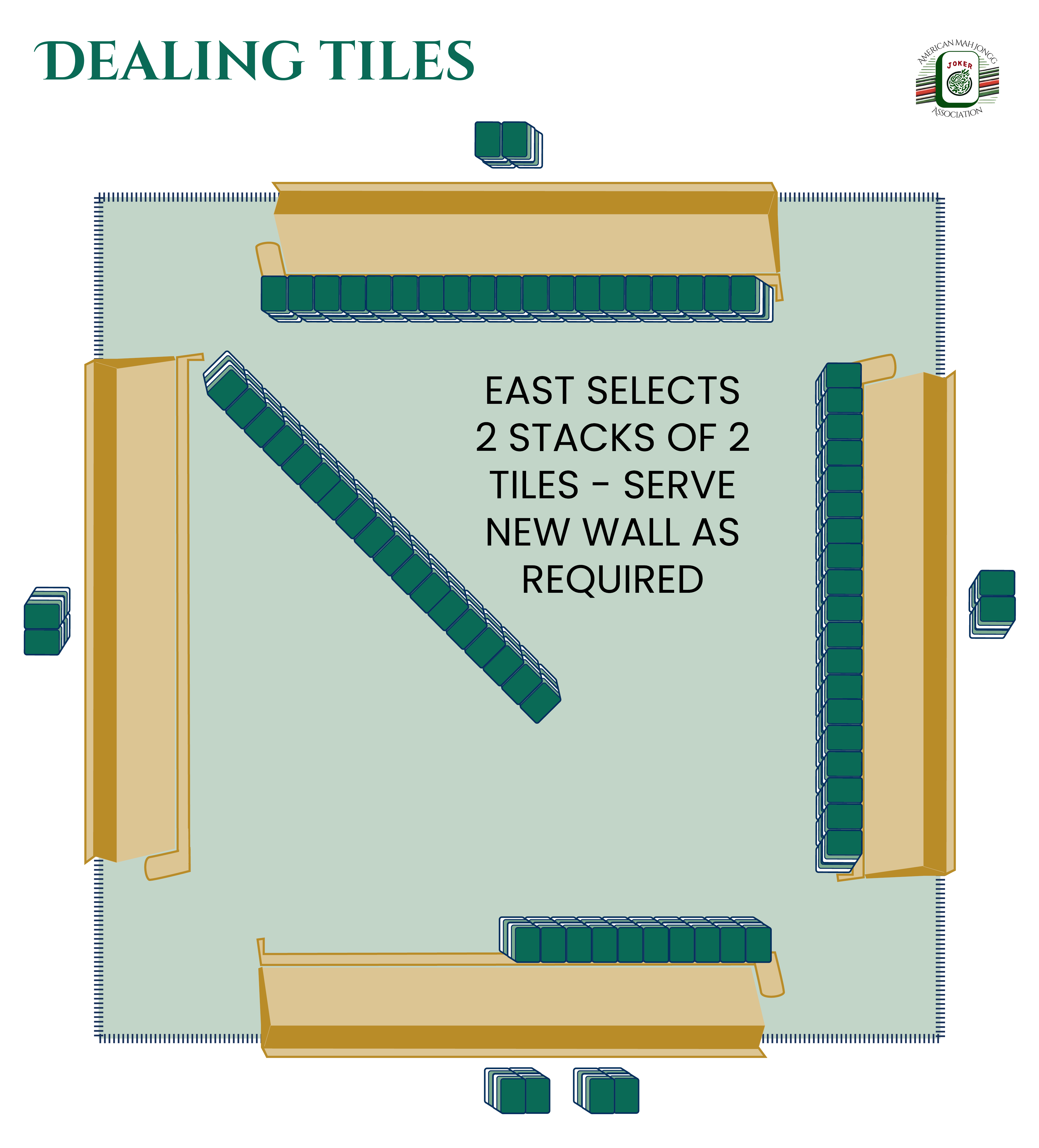
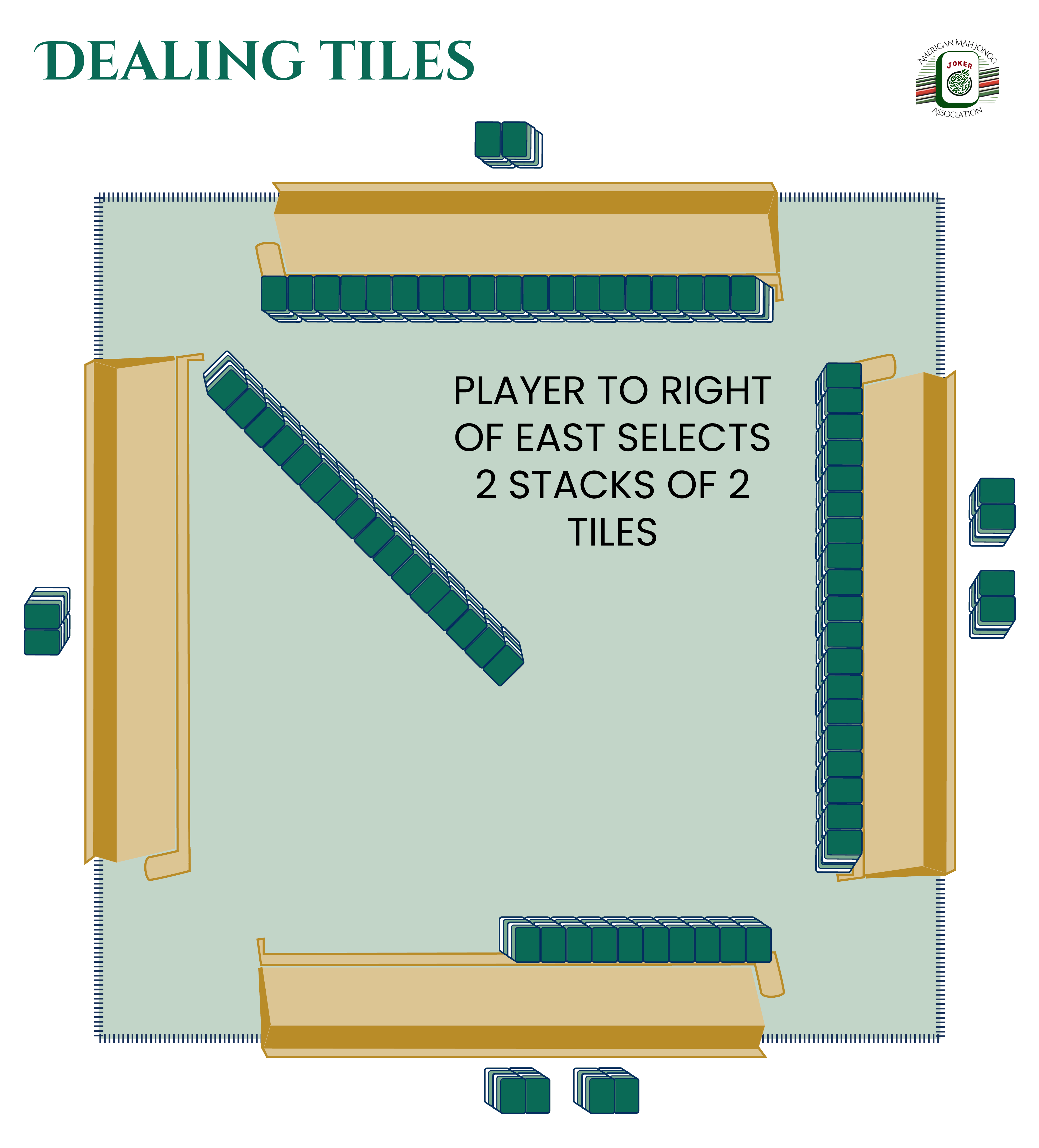
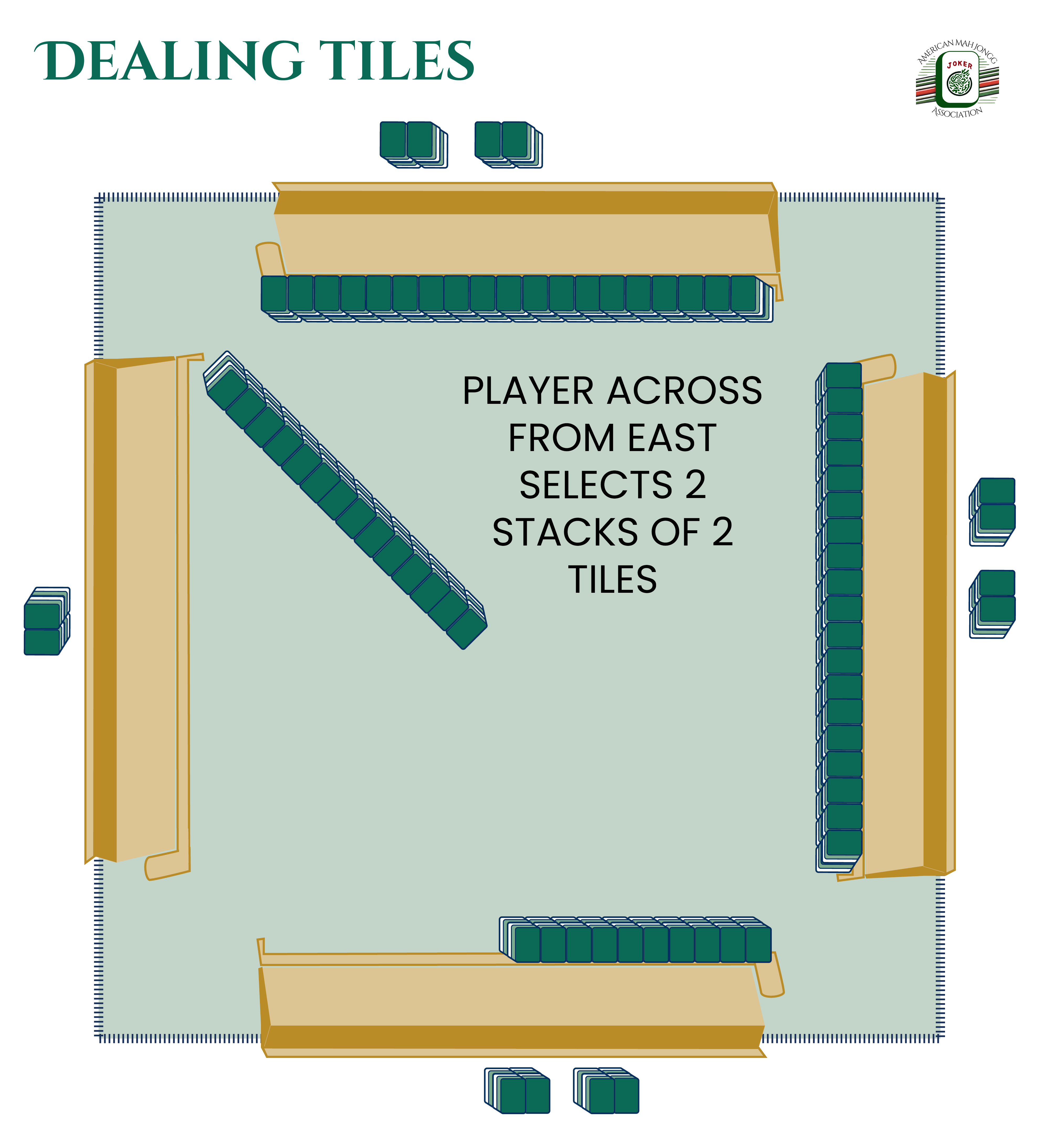
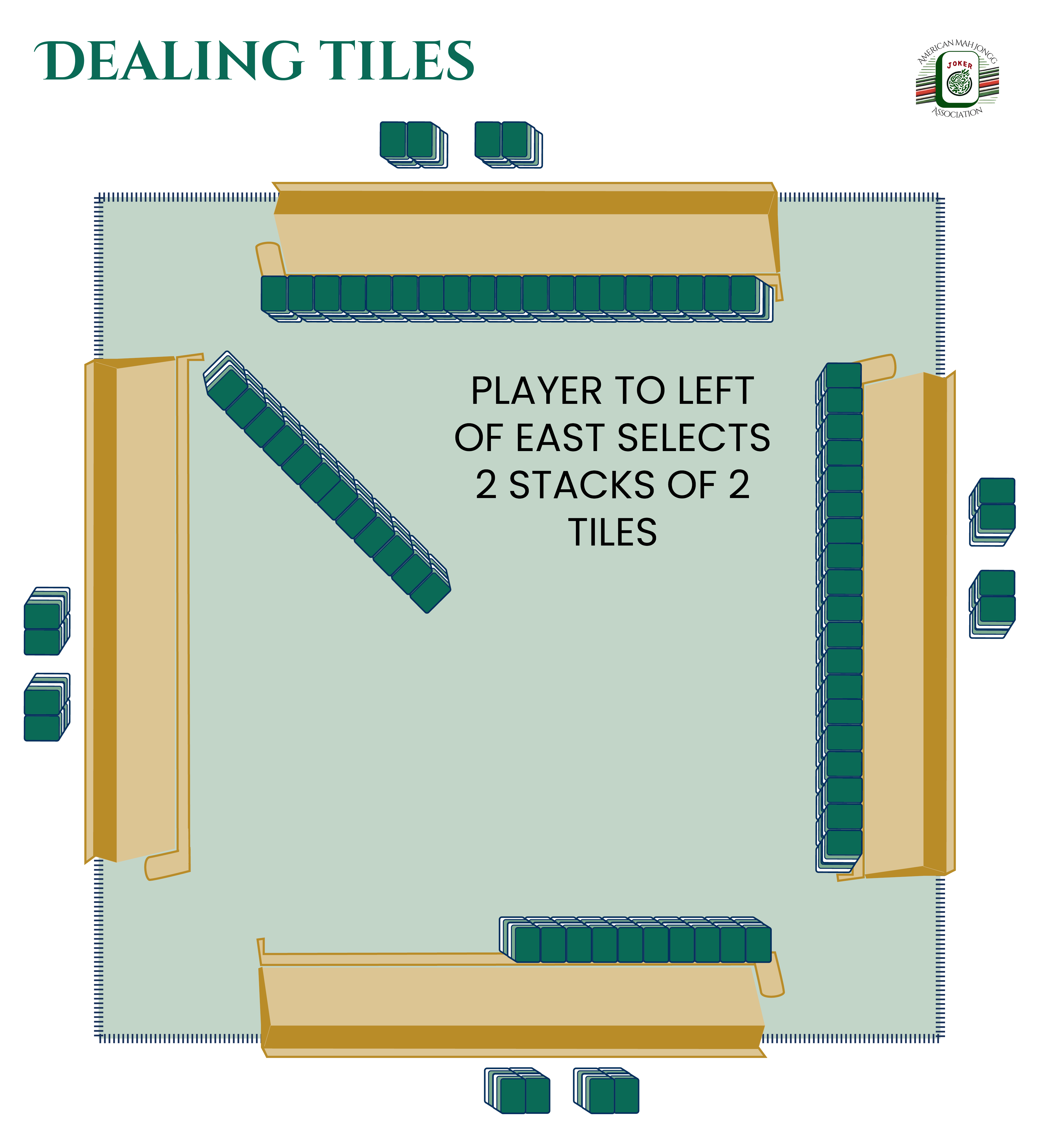
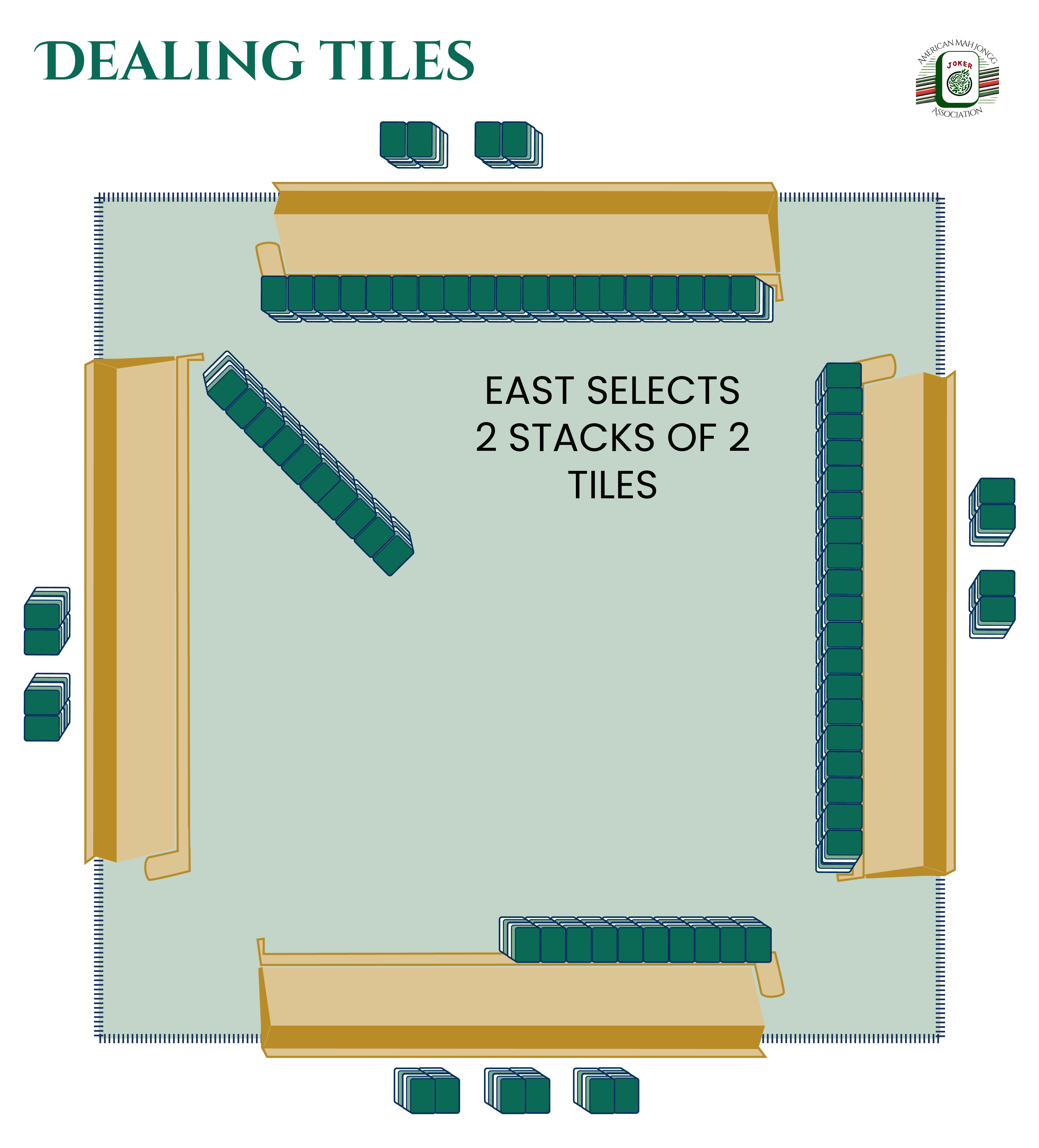
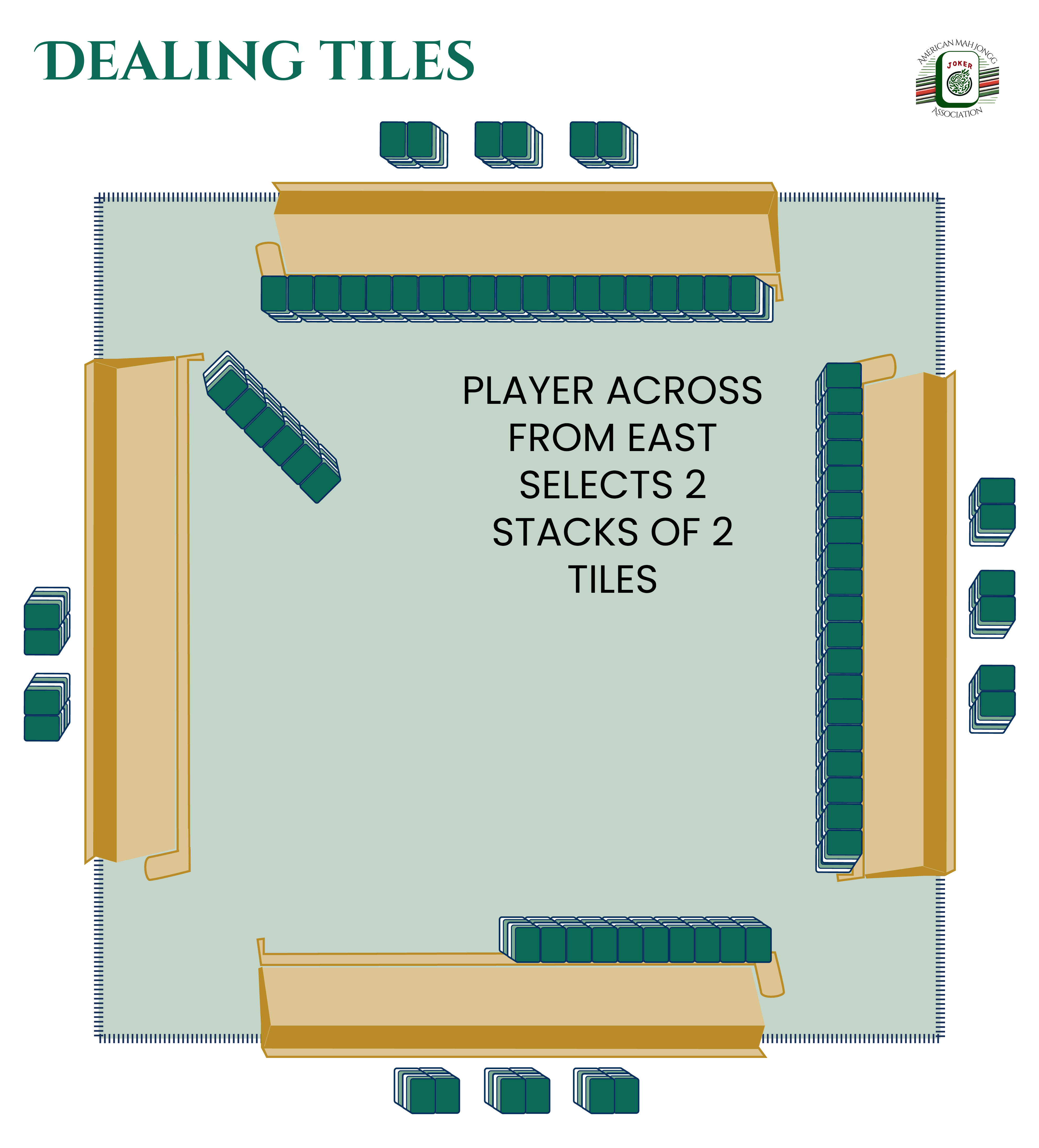
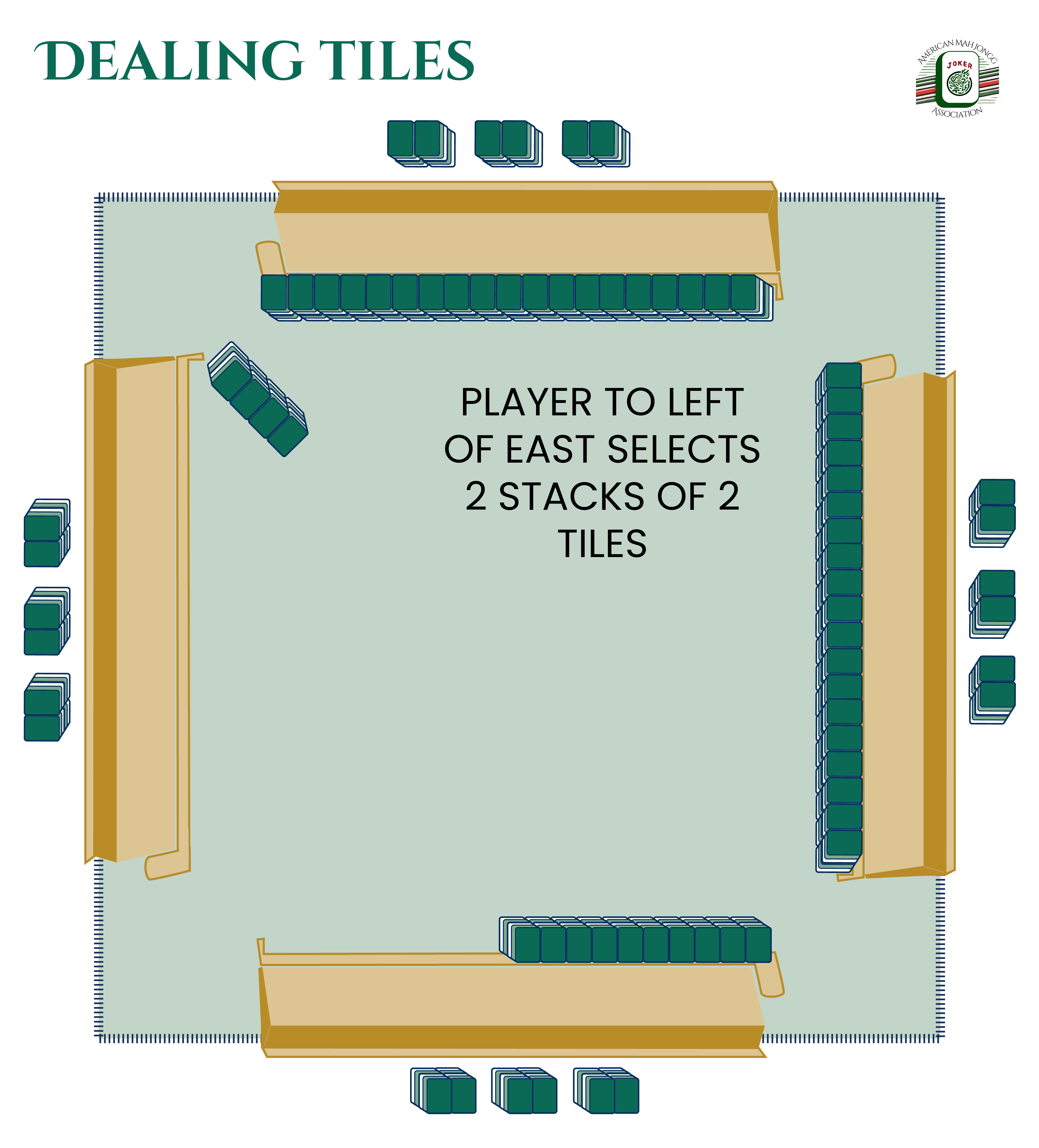
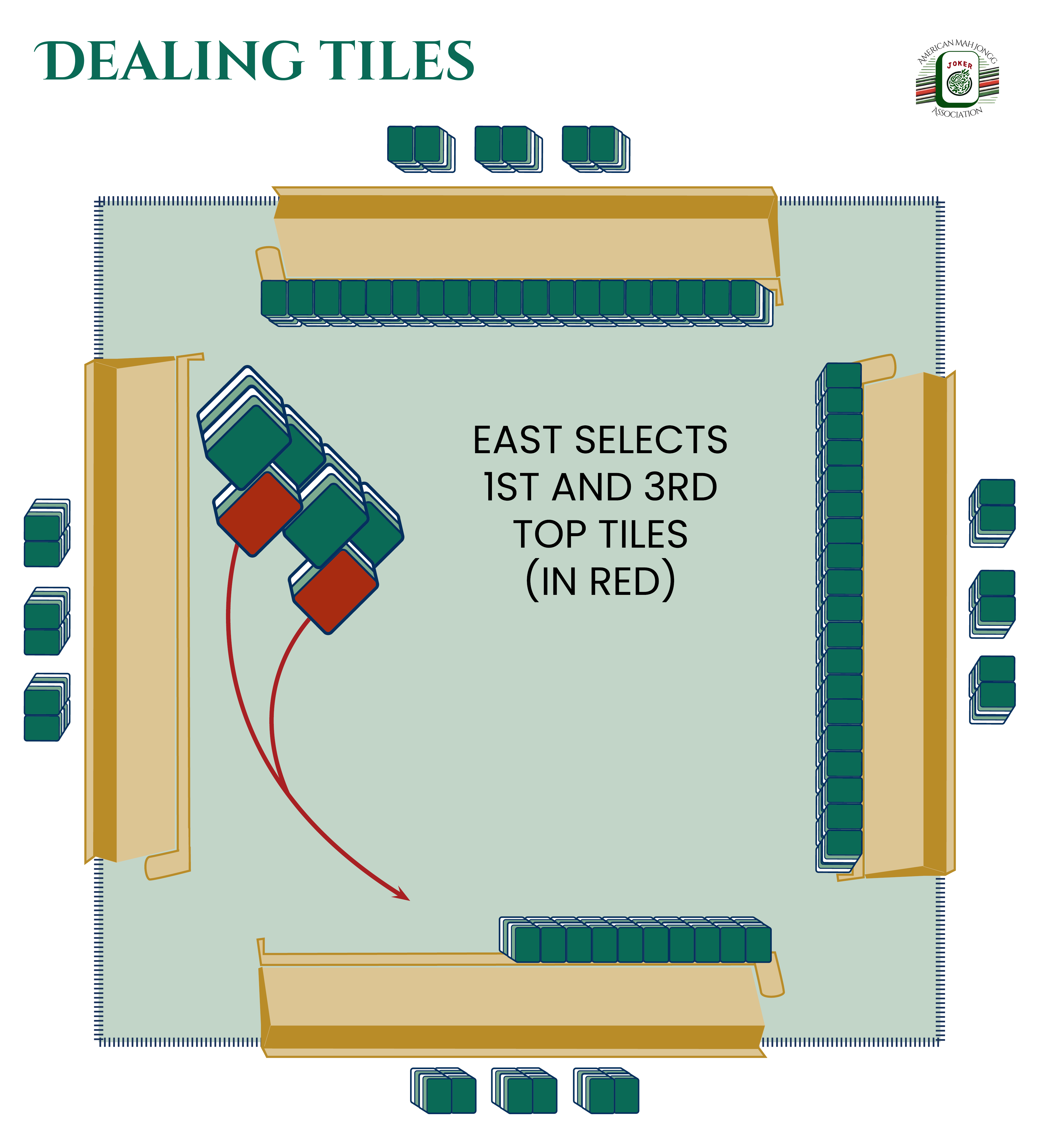
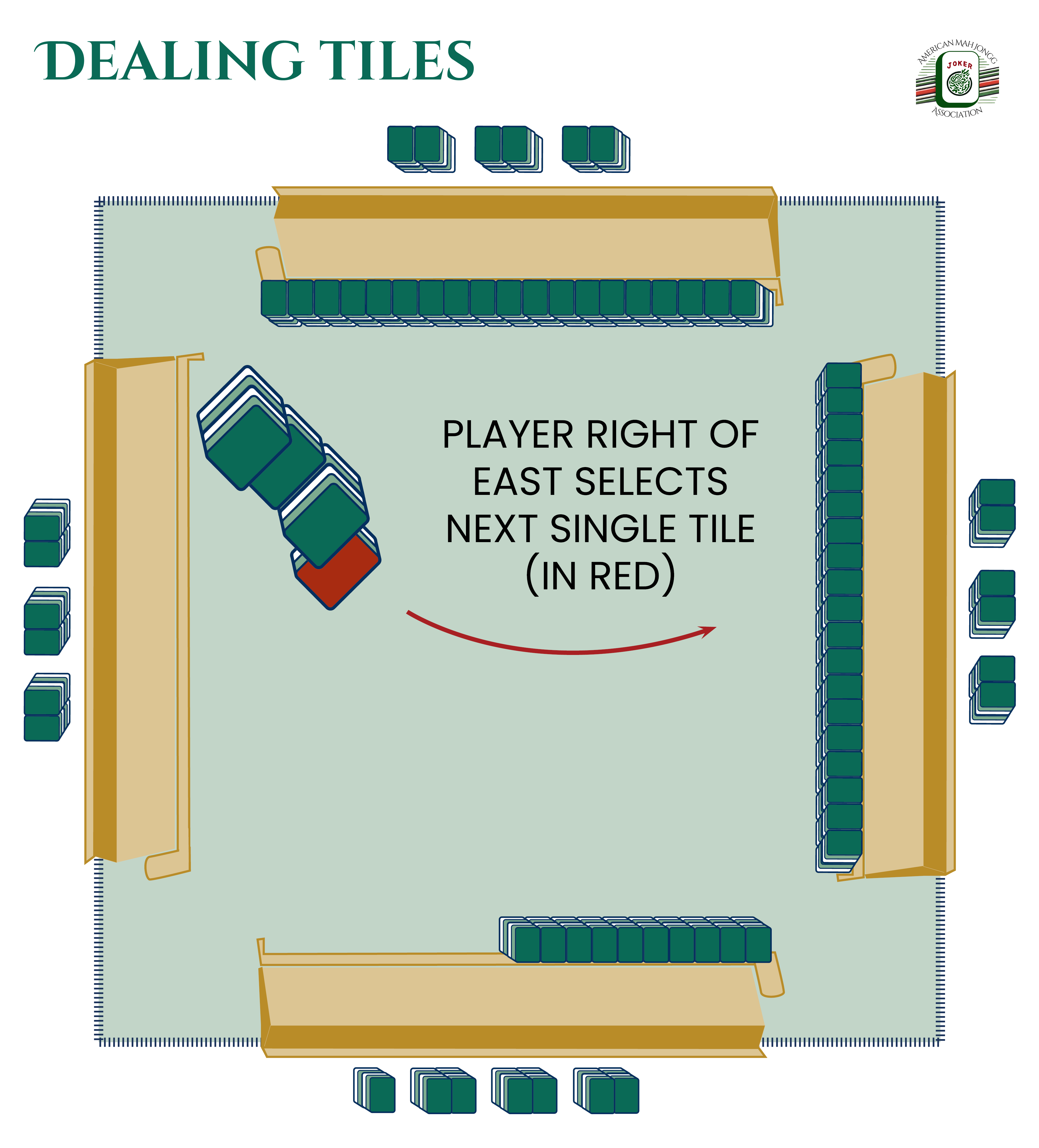
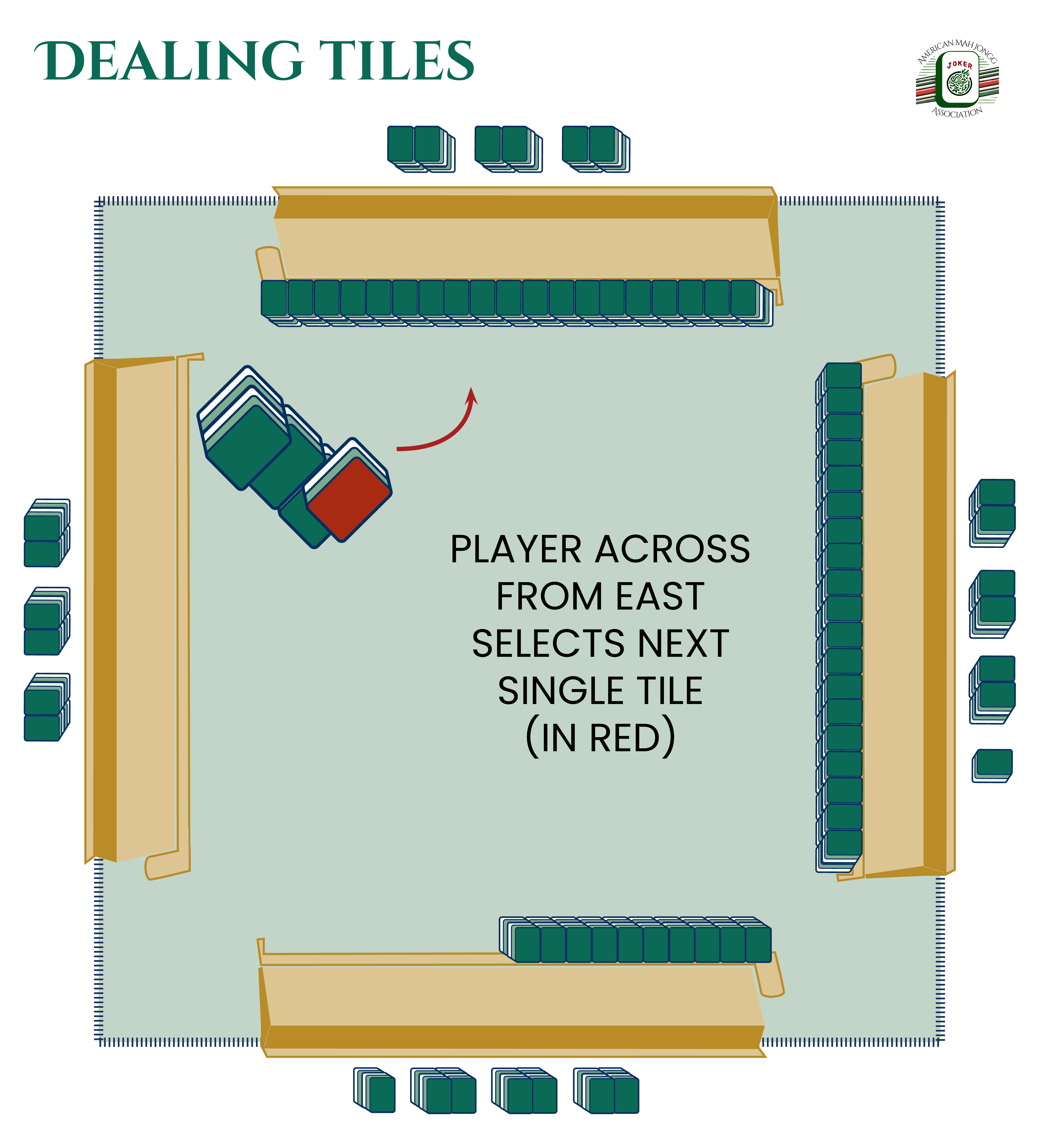
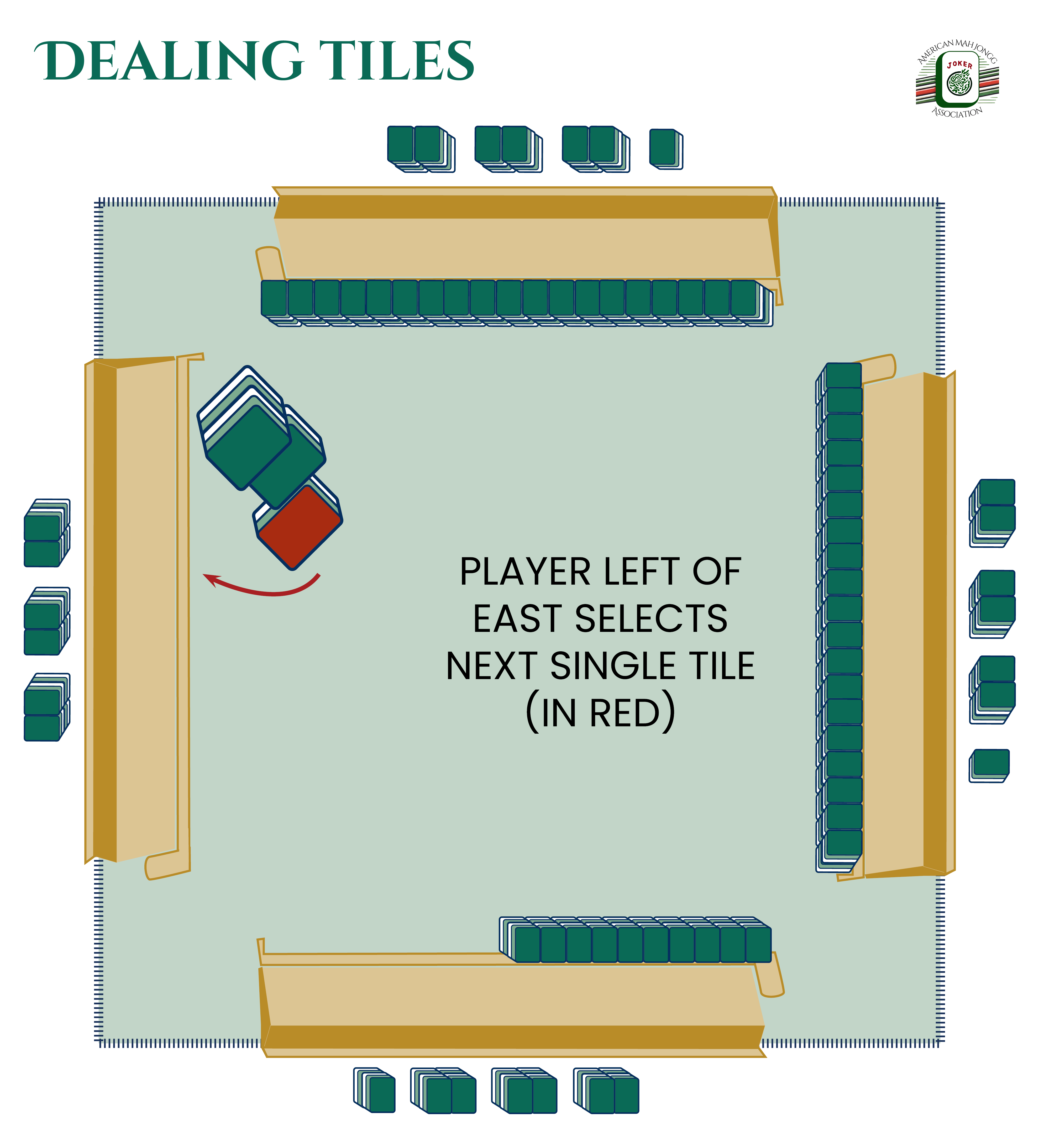
- Dealing (Selecting) Tiles: Tiles are selected one player at a time in a counterclockwise direction.
- Player Turns: When it’s time to play, turns also occur in a counterclockwise direction.
But There’s One Exception!
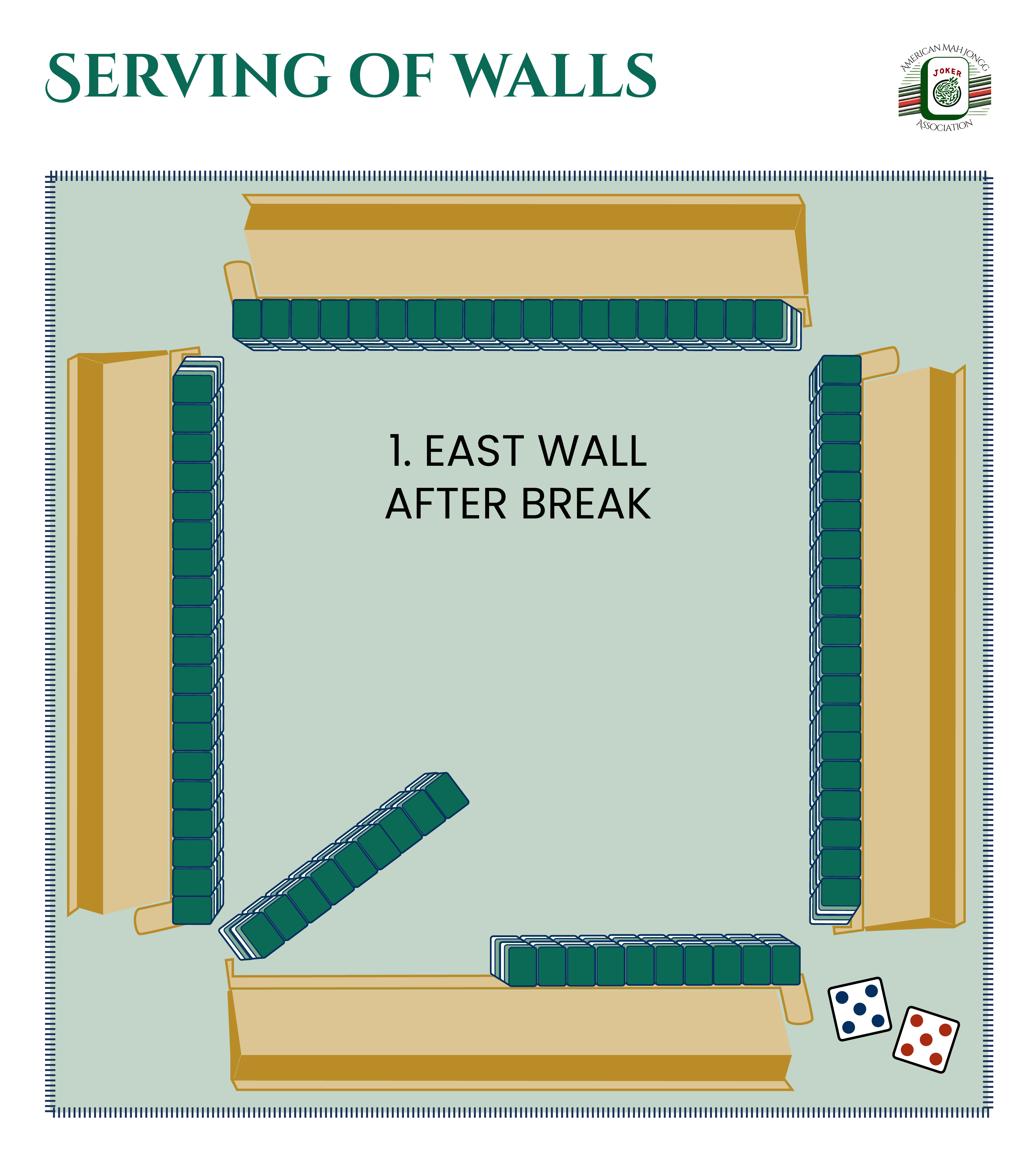
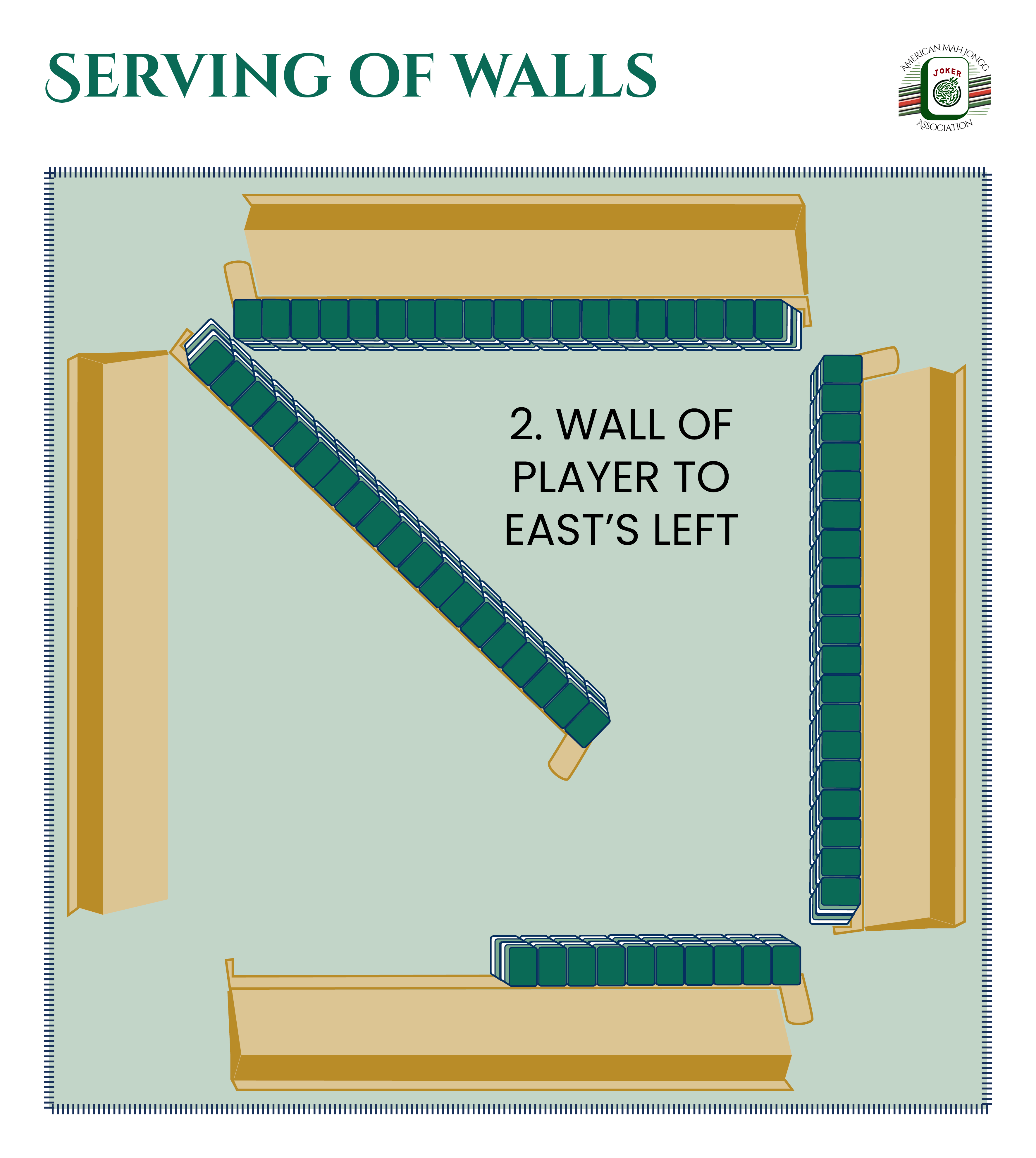
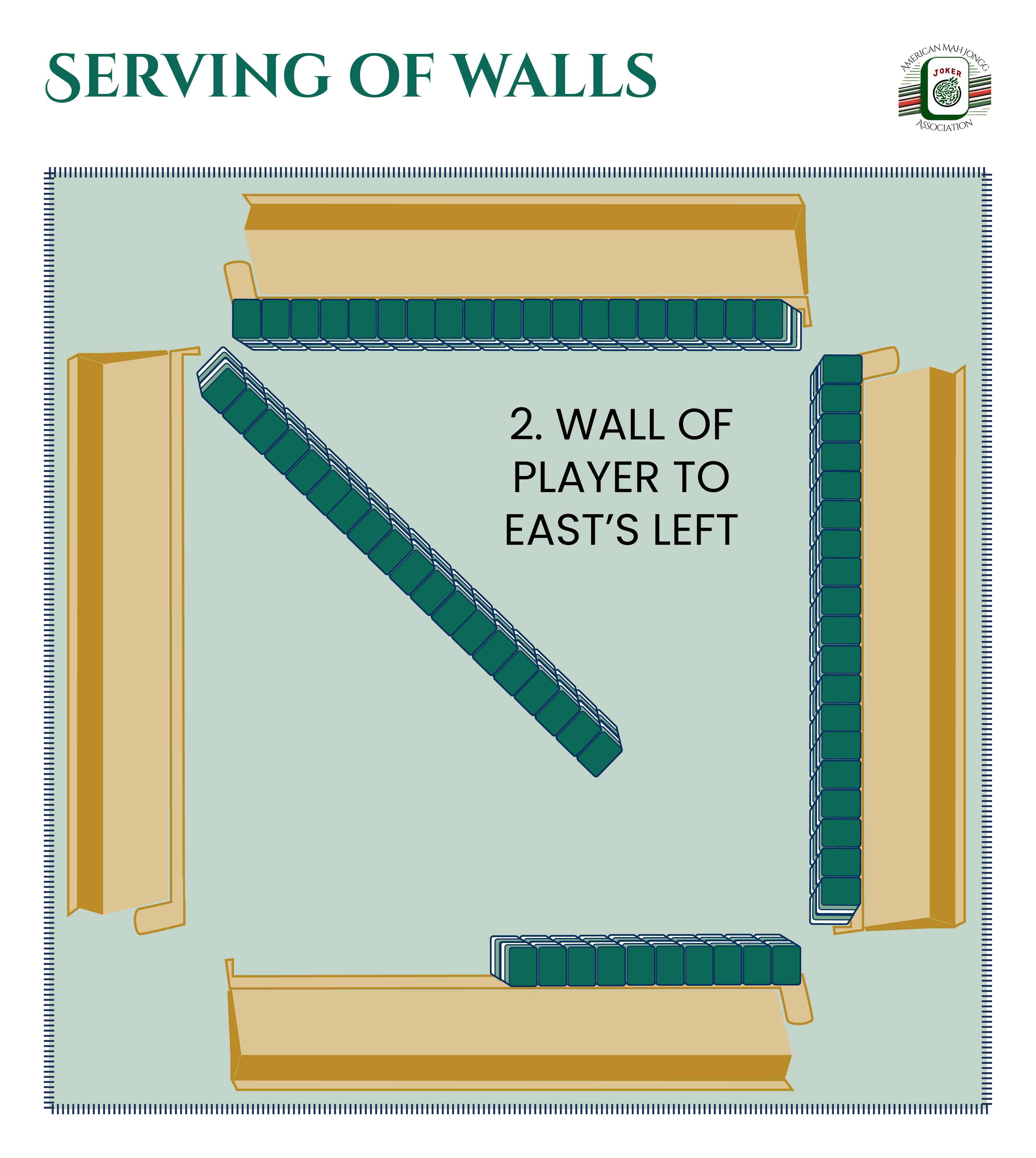
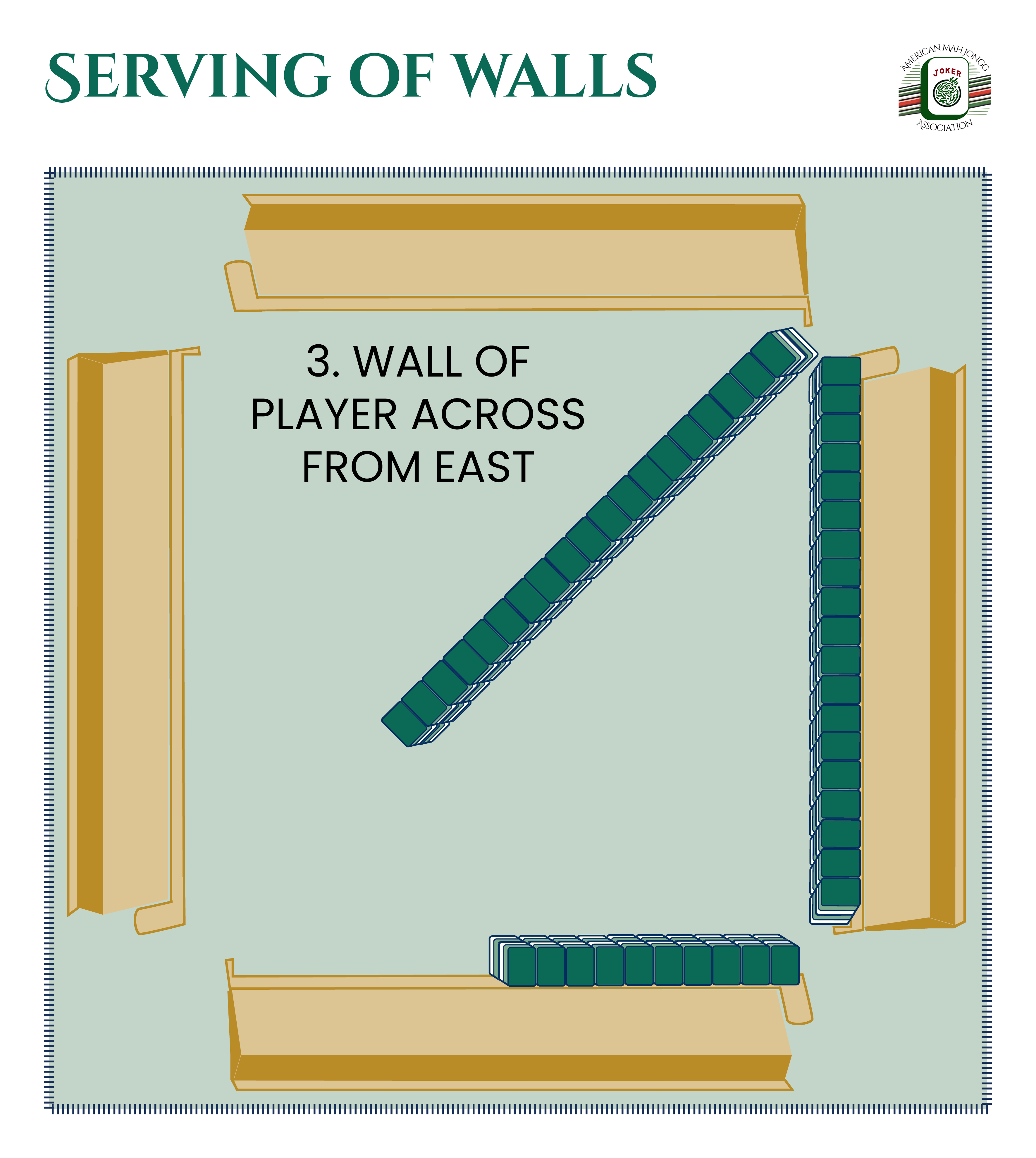
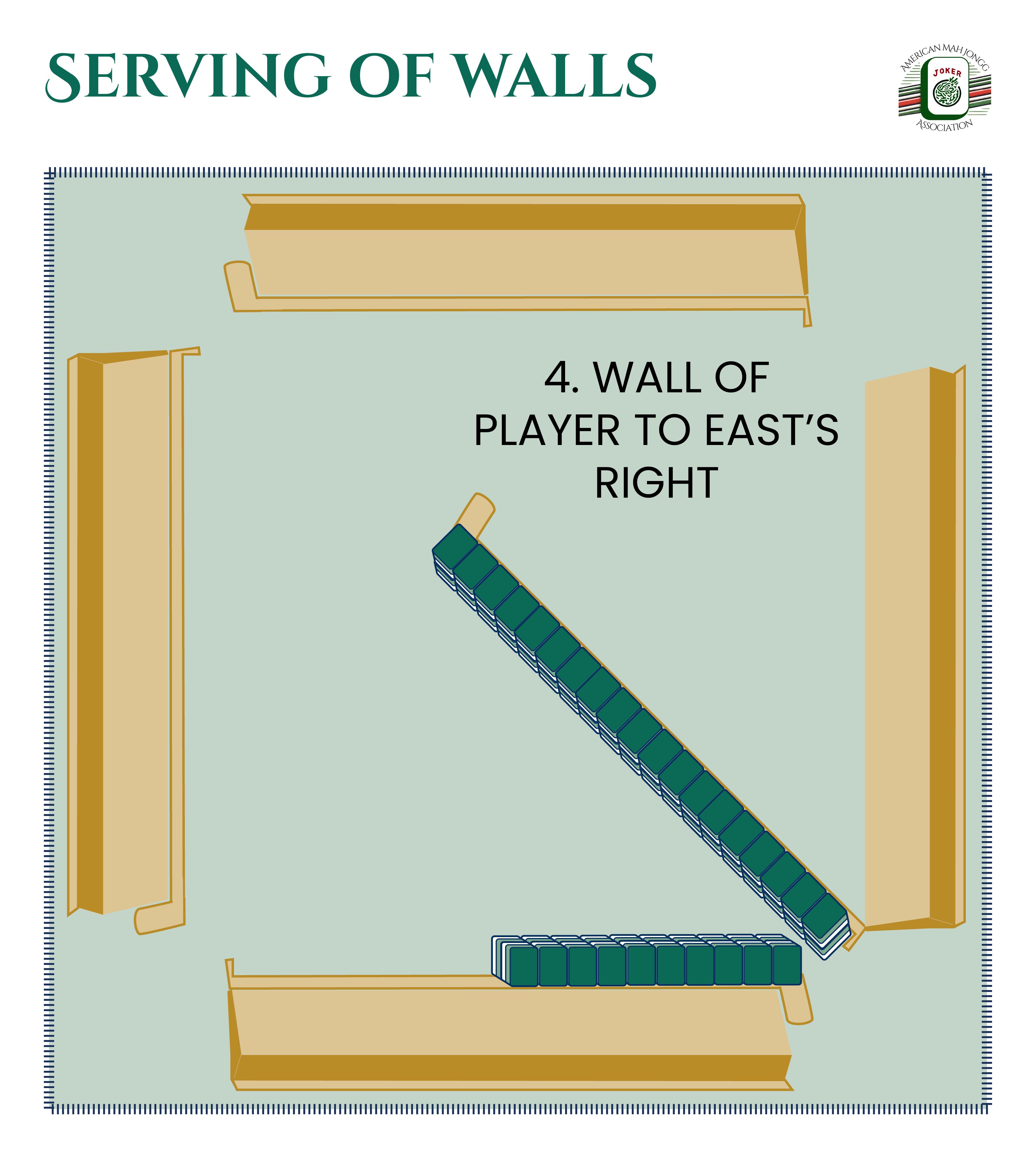
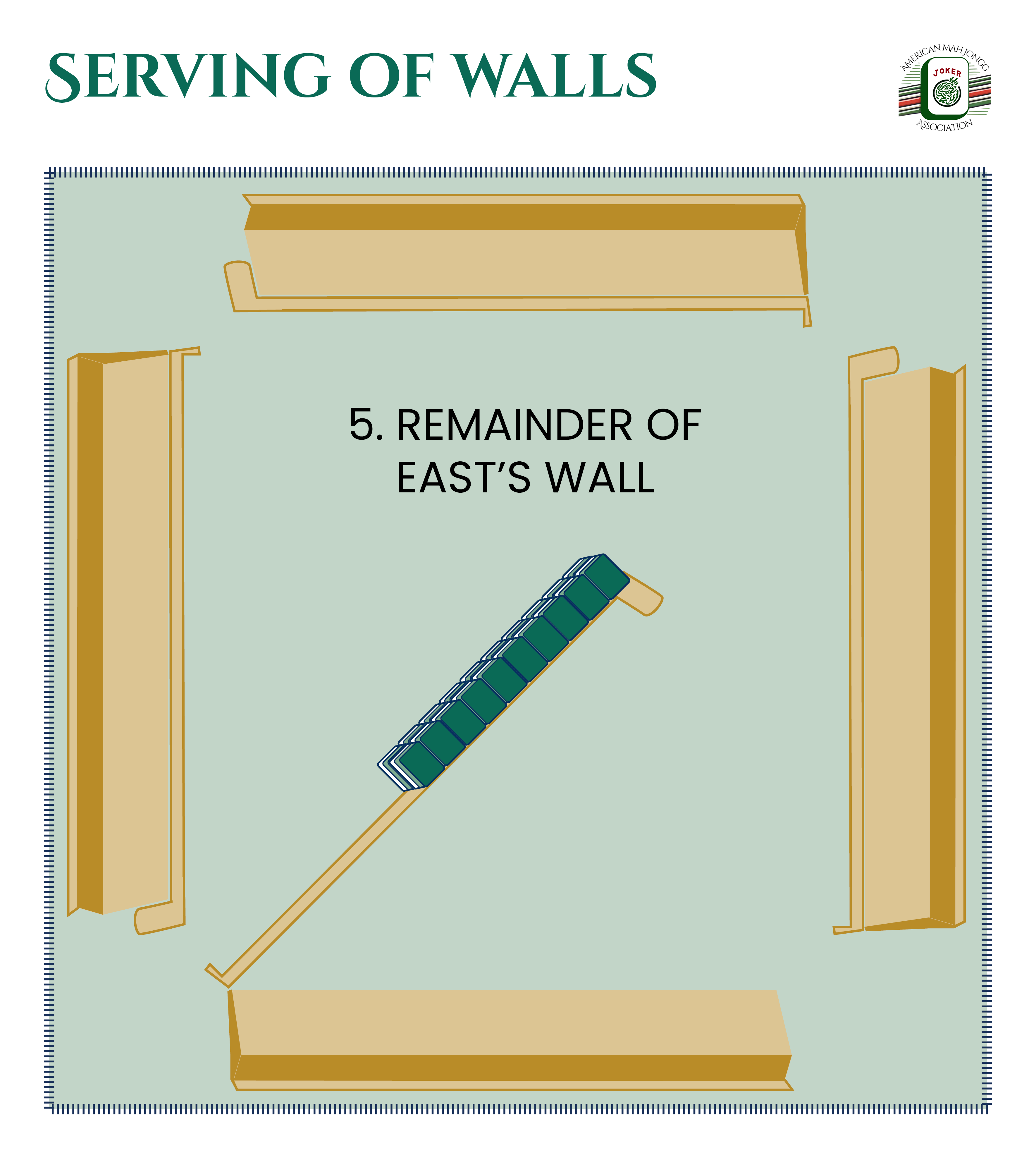
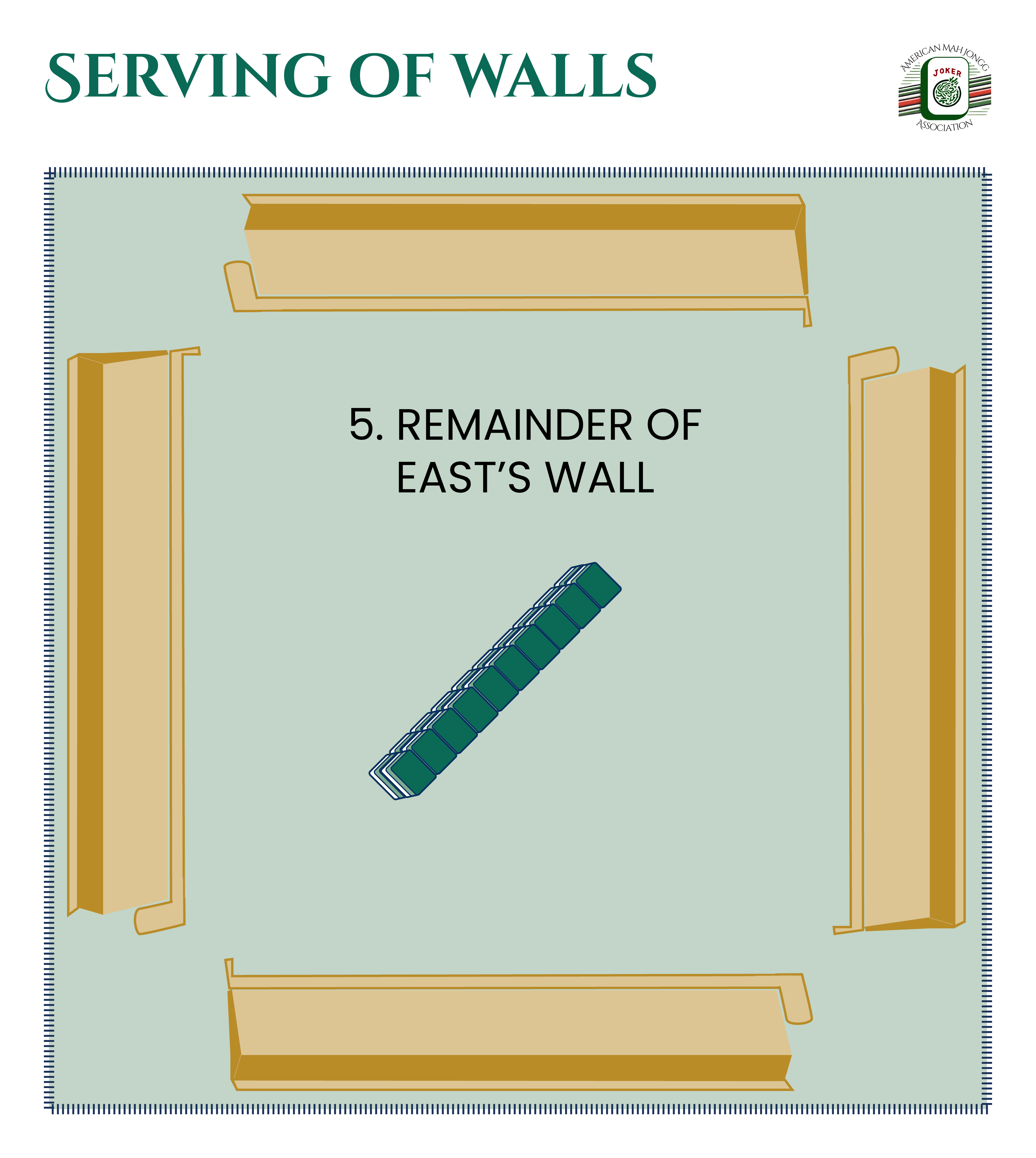
Here’s the twist! The only action that moves clockwise is serving the walls. Every time a wall of tiles runs out, the next wall to the left (clockwise) is servedThe action of a player pushing out the right end of their wall of tiles at a 45-degree angle, so… More by the corresponding player.
Keeping It Simple
So just remember — almost everything in American Mah Jongg goes counterclockwise, except for serving those walls. It’s like a little dance that keeps the game flowing smoothly! Keep an eye on that rotation, and you’ll be playing like a pro in no time.




How do you use blank tiles in American Mah Jongg?
Blank Tiles are not part of the official game.
According to the official rules of American Mah Jongg, the game is played with 152 tiles. That includes:
- The classic BamOne of the three suit tiles used in American Mah Jongg.The Bam tiles are typically engraved with the bamboo sticks… More, CrakOne of the three suit tiles used in American Mah Jongg.The Crak tiles are typically engraved with the Chinese character… More, and DotOne of the three suit tiles used in American Mah Jongg. The Dot tiles are typically shown with the number of… More suit tiles
- Wind tiles
- Dragon tiles
- FlowerThe Flower tiles are typically engraved with images of flowers. Flower tiles may be engraved with numbers however in American Mah… More tiles
- And of course, those all-important JokerThe Joker tiles are typically engraved with the word “Joker” and a symbol indicating that this tile is special.Joker tiles… More tiles
But blank tiles? They’re not part of the official setup. You won’t find any official rules about how to use them in traditional American Mah Jongg.
However! That doesn’t mean they can’t be fun. Some groups like to add their own twist with House Rules — and using blank tiles is totally one of those creative add-ons. Maybe they act as extra JokersThe Joker tiles are typically engraved with the word “Joker” and a symbol indicating that this tile is special.Joker tiles… More, wild tiles, or have their own special role. That’s all part of the beauty of House Rules — it’s like giving your game a little personality!
Now, here’s the thing — the American Mah Jongg AssociationThe organization known for fast and friendly customer service while focusing on providing tools, tips, and opportunities to connect with… More is all about promoting and explaining the game according to the official rules. While we know that House Rules can be a blast and add extra excitement to your game night, we’re going to stick to what’s official here.
If you decide to play with House Rules, the responsibility is on you to make sure it all makes sense and that everyone’s on the same page before you start. Clear agreements mean fewer disagreements — and way more fun! So gather your group, agree on the rules, and enjoy making memories around the table.
When does a player’s turn begin?
In American Mah Jongg, a player’s turn officially starts the moment the previous player’s discarded tile is fully namedA player should clearly announce the name of the tile they are discarding so all players are aware of the… More or when any part of the tile touches the table — whichever happens first.
Once that happens, the next player can either pick a tile from the wall or claim the discarded tile. But here’s the twist — in American Mah Jongg, it’s not just the next player who can claim the discarded tile. Any player at the table can call for that most recently discarded tile if it completes their hand for Mah Jongg or allows them to make a valid exposureWhen a player places a grouping of three or more identical tiles on the top part of their rack after… More.
So, stay sharp and keep an eye on those tiles! The game moves fast, and the opportunity to grab a key tile can pop up in a heartbeat.
When a player East, do they pass tiles right or left?
It all starts with EastThe player position that is referred to as Dealer, East, Pivot, or First Player. This player is responsible for breaking the… More, and then the tile selection action moves to the player on their right, and so on.
But here’s an important detail to remember: Unlike a card game, EastThe player position that is referred to as Dealer, East, Pivot, or First Player. This player is responsible for breaking the… More isn’t handing out tiles to everyone. Instead, each player should pick their own tiles from the wall. It’s a simple, clean process, and it also helps avoid any confusion. Plus, it’s a good etiquette in Mah Jongg to only touch your own tiles. No need to reach over and grab someone else’s.
So, when it’s your turn, confidently select your tiles and enjoy the excitement of what you might draw.
Is a player allowed to say “Same” when the player discards the same tile that the previous player discarded?
Let’s talk about what’s okay (and what’s not) when it comes to announcing your discarded tiles
When Discarding a JokerThe Joker tiles are typically engraved with the word “Joker” and a symbol indicating that this tile is special.Joker tiles… More Tile
If you’re discarding a JokerThe Joker tiles are typically engraved with the word “Joker” and a symbol indicating that this tile is special.Joker tiles… More — no problem at all! You’ve got a few options:
- You can simply say “Joker”.
- You could say “Same” since a JokerThe Joker tiles are typically engraved with the word “Joker” and a symbol indicating that this tile is special.Joker tiles… More is a wild tile and can represent any natural tileAny tile in an American Mah Jongg set other than a Joker tile. An American Mah Jongg set of tiles contains… More, making it technically the same as the previously discarded tile.
- Or, you could even repeat the name of the last discarded tile. Just like stating “Same”, the Joker’s wild nature allows it to represent the previously discarded tile.
No fuss, no confusion. Everyone at the table knows that Jokers can’t be claimed, so saying “JokerThe Joker tiles are typically engraved with the word “Joker” and a symbol indicating that this tile is special.Joker tiles… More, “Same”, or repeating the name of the last discarded tile works just fine in this case!
When Discarding a Natural TileAny tile in an American Mah Jongg set other than a Joker tile. An American Mah Jongg set of tiles contains… More
If you’re discarding a natural tileAny tile in an American Mah Jongg set other than a Joker tile. An American Mah Jongg set of tiles contains… More (like a Dot, Bam, Crak, Wind, Dragon, or FlowerThe Flower tiles are typically engraved with images of flowers. Flower tiles may be engraved with numbers however in American Mah… More), you can also say ‘Same’ if your discard is identical to the previously discarded tile. Otherwise, the official rules state that a discarded tile must be correctly namedA player should clearly announce the name of the tile they are discarding so all players are aware of the… More, like:
- “Five Dot”
- “Three Bam”
- “Seven Crack”
- “Red”
- “North”
- “Flower”
A tile can’t be claimed until it’s correctly namedA player should clearly announce the name of the tile they are discarding so all players are aware of the… More. Calling your tiles properly keeps the game flowing smoothly and makes sure everyone’s on the same page.
Stick to this, and you’ll keep the table happy and the game drama-free!
Must a player rack a tile picked from the wall to prevent other players from calling the previous discarded tile?
RackingThe action of a player placing a tile on the sloping side of the player’s rack. This action is complete (finished)… More and how this action plays a role in preventing other players from calling the previous discarded tile.
Do you have to rack a tile to block someone else from calling it?
Not necessarily! While rackingThe action of a player placing a tile on the sloping side of the player’s rack. This action is complete (finished)… More a tile is definitely one way to close that Window of OpportunityThe period of time where a discarded tile can be claimed by another player. The period of time to claim a… More, it’s not the only way. The key is that once you’ve officially made your next move, the window closes, and no one else can swoop in and grab that last discard.
Here are some other options on how you can close that window without rackingThe action of a player placing a tile on the sloping side of the player’s rack. This action is complete (finished)… More:
- Option 1: If you pick a tile from the wall and immediately discard it, that’s it! The window closes — no need to rack.
- Option 2: If you pick a tile from the wall and proudly declare Mah Jongg, you’re good to go! No need to rack first because calling Mah Jongg closes the window. (Congrats, by the way!)
- Option 3: If you pick a tile and jump right into a Joker ExchangeAn action that a player may perform when it is their turn to play that allows a player to trade… More, that also seals the deal. No rackingThe action of a player placing a tile on the sloping side of the player’s rack. This action is complete (finished)… More necessary — the initiation of the exchange closes the window.
But if none of these moves are on the table, then yep — rackingThe action of a player placing a tile on the sloping side of the player’s rack. This action is complete (finished)… More is your best bet to close that window. Once the tile is securely placed on the sloping side of your rack and your fingers are off, no one can call the previous discarded tile.
So, while rackingThe action of a player placing a tile on the sloping side of the player’s rack. This action is complete (finished)… More isn’t always a must, it’s definitely one of the simplest and most reliable ways to make sure that window is officially closed. Play it smart, keep your moves clear, and you’ll be making confident plays like a total pro!
When is a player committed to picking a tile from the wall?
A player is committed to picking a tile from the wall once the player moves the tile on the wall in any manner. A player can change their mind and decide to claim the discarded tile instead of picking a tile from the wall if the player has only touched the tile (but not moved the tile).
Note: A player does not need to announce their intent to pick a tile from the wall.
It’s important to note that once the tile is picked from the wall, the player cannot change their mind. This commitment helps maintain the flow of the game and ensures players are making timely decisions.
When is a player committed to discarding a tile?
Let’s talk about when a player is officially committed to discarding a tile. It’s pretty straightforward, but there are a couple of key things to keep in mind.
A player is locked into their decision to discard a tile as soon as the tile is fully namedA player should clearly announce the name of the tile they are discarding so all players are aware of the… More or any part of the tile touches the table — whichever happens first.
Now, what does it mean to fully name a tile? It’s all about clarity. Simply saying “Seven” doesn’t cut it, because that could mean a Seven DotOne of the three suit tiles used in American Mah Jongg. The Dot tiles are typically shown with the number of… More, Seven BamOne of the three suit tiles used in American Mah Jongg.The Bam tiles are typically engraved with the bamboo sticks… More, or Seven CrakOne of the three suit tiles used in American Mah Jongg.The Crak tiles are typically engraved with the Chinese character… More. But if a player says something like “Seven DotOne of the three suit tiles used in American Mah Jongg. The Dot tiles are typically shown with the number of… More,” “North,” “Red,” or “FlowerThe Flower tiles are typically engraved with images of flowers. Flower tiles may be engraved with numbers however in American Mah… More,” that’s a fully named tile. Everyone knows exactly which tile is being discarded, and that’s when the commitment is sealed (or if the tile has touched the table).
But here’s where it can get tricky. If a player accidentally says the wrong tile name — oops! — they’re still committed to discarding the tile they physically have in their hand. So, let’s say a player is holding a 5 CrakOne of the three suit tiles used in American Mah Jongg.The Crak tiles are typically engraved with the Chinese character… More but says “South” as they toss the tile down. No take-backs here! They’re still discarding the 5 CrakOne of the three suit tiles used in American Mah Jongg.The Crak tiles are typically engraved with the Chinese character… More, not a South tile.
To fix the situation, the player simply needs to correctly name the tile that’s actually been discarded. They’d just say, “5 CrakOne of the three suit tiles used in American Mah Jongg.The Crak tiles are typically engraved with the Chinese character… More,” and from there, it’s correctly namedA player should clearly announce the name of the tile they are discarding so all players are aware of the… More and up for grabs.
So, remember — “Down is Down!” Once the tile is fully namedA player should clearly announce the name of the tile they are discarding so all players are aware of the… More or touches the table, that tile is as good as gone!
Can a player change their exposure?
Yes, but only until the player performs a Joker exchangeAn action that a player may perform when it is their turn to play that allows a player to trade… More or discards, whichever comes first.*
An exposureWhen a player places a grouping of three or more identical tiles on the top part of their rack after… More is made by claiming a discarded tile. The quantity of tiles may change, so a PungA grouping that consists of three identical tiles. Joker tiles are allowed and up to three Joker tiles can be used… More may become a KongA grouping that consists of four identical tiles. Joker tiles are allowed and up to four Joker tiles can be used… More, a KongA grouping that consists of four identical tiles. Joker tiles are allowed and up to four Joker tiles can be used… More may become a QuintA grouping that consists of five identical tiles. Joker tiles are allowed and up to five Joker tiles can be used… More, and a larger grouping may be reduced again, as often as the player wishes. The mixture of natural tilesAny tile in an American Mah Jongg set other than a Joker tile. An American Mah Jongg set of tiles contains… More and JokersThe Joker tiles are typically engraved with the word “Joker” and a symbol indicating that this tile is special.Joker tiles… More may also change, since any PungA grouping that consists of three identical tiles. Joker tiles are allowed and up to three Joker tiles can be used… More, KongA grouping that consists of four identical tiles. Joker tiles are allowed and up to four Joker tiles can be used… More, Quint, or SextetA grouping that consists of six identical tiles. Joker tiles are allowed and up to six Joker tiles can be used… More may be completed with JokersThe Joker tiles are typically engraved with the word “Joker” and a symbol indicating that this tile is special.Joker tiles… More.
The identity of the groupingA collection of tiles that consist of identical tiles in different quantities and/or tiles arranged in an aesthetic manner. A winning… More may not change. The called tile must remain in the exposureWhen a player places a grouping of three or more identical tiles on the top part of their rack after… More, so a player who has claimed a 1 Dot may not rebuild the exposureWhen a player places a grouping of three or more identical tiles on the top part of their rack after… More around a different tile.
Performing a Joker exchange and discarding both end the ability to add tiles to or take tiles away from the exposure. One substitution is still permitted later in the game: a Joker in the exposure may be replaced with the matching natural tile by any player, on the exchanging player’s turn.
In practice. Look at the discarded tile closely before you take it. Once it is on your rack, you are committed to it, so if it is not the tile you want, leave it on the table.
Then build the exposureWhen a player places a grouping of three or more identical tiles on the top part of their rack after… More. Add the tiles you need from your rack, and change the lineup as many times as you like while you decide which hand you are playing.
Arrange the exposure the way you want it before you do anything else. Performing a Joker exchange and discarding both end your ability to add tiles to or take tiles away from the exposure. The exposureWhen a player places a grouping of three or more identical tiles on the top part of their rack after… More is set at that moment, and the quantity of tiles in it may not change for the rest of the game.
*Where the sources disagree. Mah Jongg Made Easy and Rule 8 under Claiming a Discard on the back of the Card both state that a player may change an exposure until the player discards. Neither mentions that a Joker exchange also ends a player’s ability to change the exposure. A player reading only those two sources would conclude that the exchanged Joker may be added to the exposure. Based on the League’s answer in a bulletin, that conclusion is wrong. The exposure would be incorrect, and the hand may be declared dead. The 2026 bulletin You Asked Us, Q4, makes it clear: making an exposure and performing a Joker exchange are two separate moves, and no tiles may be added to or taken away from the exposure once the exchange begins.
The Association treats the bulletin as governing. NMJL issues all three documents, the bulletin is the most recent, and it answers this question directly. NMJL has not published an order of precedence among the Card, Mah Jongg Made Easy, and its bulletins, so this is the Association’s determination rather than a stated League policy.
Charleston
Is the Charleston mandatory and if the Charleston is not mandatory when can the Charleston be stopped?
The Charleston is indeed a key part of the American Mah Jongg game, but it’s not entirely mandatory in every situation.
The first phase of the Charleston is mandatory for all players unless East declares Mah Jongg before the Charleston begins. If East has a winning hand before the Charleston starts, this is known as a “Heavenly Hand,” and the Charleston is skipped altogether.
The second phase of the Charleston is optional. Any player can object to performing this phase without needing to provide a reason. If one or more players object before anyone has looked at the tiles passed during the first pass of the second phase (often referred to as the Second Left), then all players skip this phase and move directly to the third phase, known as the Courtesy Pass. However, if any player looks at the tiles passed during the first pass of the second phase, then the second phase of the Charleston must be completed by all players.
The third phase is optional as well and can still be performed even if the second phase is skipped. Each opposite pairA grouping that consists of two identical tiles. A Joker tile can not be used to represent either one or both… More of players decide independently whether to perform this phase of passing. If one player does not want to pass any tiles during the third phase then no exchange occurs between those two players however the other player pairA grouping that consists of two identical tiles. A Joker tile can not be used to represent either one or both… More may still pass tiles.
So, to sum it up: the first Charleston phase is mandatory unless EastThe player position that is referred to as Dealer, East, Pivot, or First Player. This player is responsible for breaking the… More has a Heavenly HandWhen the Dealer (East), has Mah Jongg before the Charleston begins. The Dealer is the only player able to declare Mah… More. The second phase can be skipped if one or more players object to performing the second phase before any player has looked at tiles pass during the first pass of the second phase (Second Left). The third phase is optional and passing of tiles is decided between opposite player pairs. The third phase can still be performed even if the second phase is skipped.
Can the Charleston be stopped by East, if East gets Mah Jongg during the Charleston?
The Charleston can NEVER be stopped while a phase is in progress, even if EastThe player position that is referred to as Dealer, East, Pivot, or First Player. This player is responsible for breaking the… More gets a Mah Jongg hand during the phase.
Here’s the breakdown of when the Charleston can be stopped if EastThe player position that is referred to as Dealer, East, Pivot, or First Player. This player is responsible for breaking the… More gets Mah Jongg during the Charleston:
If EastThe player position that is referred to as Dealer, East, Pivot, or First Player. This player is responsible for breaking the… More has a winning Mah Jongg hand at the end of the first, second or third phases of the Charleston, EastThe player position that is referred to as Dealer, East, Pivot, or First Player. This player is responsible for breaking the… More can declare Mah Jongg with a hand known as an “Earthly Hand”.
If EastThe player position that is referred to as Dealer, East, Pivot, or First Player. This player is responsible for breaking the… More receives tiles during the first phase of the Charleston that would allow them to declare Mah Jongg, they MUST continue passing tiles until the first phase is completed. Only after the first phase is finished can EastThe player position that is referred to as Dealer, East, Pivot, or First Player. This player is responsible for breaking the… More declare Mah Jongg if they still have a winning handWhen a player has 14 tiles arranged in groupings that match one of the hands displayed on the current National… More.
If East receives tiles during the second phase of the Charleston that would allow them to declare Mah Jongg, they MUST continue passing tiles until the second phase is completed. Only after the second phase is finished can EastThe player position that is referred to as Dealer, East, Pivot, or First Player. This player is responsible for breaking the… More declare Mah Jongg if they still have a winning handWhen a player has 14 tiles arranged in groupings that match one of the hands displayed on the current National… More.
So, to sum it up: EastThe player position that is referred to as Dealer, East, Pivot, or First Player. This player is responsible for breaking the… More cannot stop the Charleston while it is ongoing to declare Mah Jongg, but they can declare Mah Jongg immediately after a Charleston phase completion if they have a winning Mah Jongg hand.
Do You Have to Wait to Pick Up Your Passed Tiles?
Do You Have to Wait to Pick Up Your Passed Tiles?
This covers what the official rules say about when you may pick up and look at the tiles passed to you, what each table decides for itself, and who settles a disagreement in different settings.
Do I have to wait until everyone has their tiles before I pick up mine?
There is one official rule about order and it applies to you alone. You must pass your own three tiles before you pick up the three being passed to you. Once you have done that, you may look at them. No rule requires you to wait for the other players. A group that waits for all four players is following a table rule, not an official one.
Then why do so many tables wait?
When one player picks up and passes quickly and another needs more time, the table can lose track of which pass it is on. Waiting keeps all four players on the same pass. That is a decision about pace, not about fairness.
Is picking up early an unfair advantage?
No. A player sees only their own three tiles, whenever they look at them, and never sees another player’s hand. Looking early also costs no one else any time. A player whose tiles arrive last may use as much time as needed before making the next pass.
Does looking at my tiles early affect a blind pass?
Yes, for the player who looks. A blind passAn action performed by a player when the player wants to pass fewer than three tiles from their hand in… More may be made on the last pass of either Charleston, which is the first left and the last right. On those two passes a player may take one, two, or all three of the tiles being passed to them and send them on without looking at them. The rules require that the player making the blind passAn action performed by a player when the player wants to pass fewer than three tiles from their hand in… More has not looked at those tiles. A player who looks at incoming tiles on either of those passes gives up the blind passAn action performed by a player when the player wants to pass fewer than three tiles from their hand in… More for that pass. It has no effect on the player who passed the tiles.
Does looking at my tiles affect stopping the second Charleston?
Yes. Once a player has picked up or looked at the tiles from the second left, which is the first pass of the second Charleston, it can no longer be stopped.
Can my group require everyone to wait?
Yes. A group may adopt any table rule its players agree on, including waiting for all four players before anyone picks up their tiles. State table rules before the first Charleston begins so every player at the table knows them.
Someone at the table told me I was doing it wrong. Now what?
Who decides depends on where the game is played. In a private home, the host sets the table rules. At a league or an open play session, the person running the session decides. At a tournament, the published tournament rule set applies and the tournament director rules on disputes. In every setting, raise the question after the hand rather than during the Charleston.
How do I tell an official rule from a table rule?
Official rules are published by the National Mah Jongg LeagueThe organization responsible for annually publishing and mailing the NMJL Card. This organization also publishes the official rules to American Mah… More and cover the card, the hands, and how the game is played. Table rules are agreements a group adds on top, such as whether players wait for the table before picking up passed tiles, how the optional pass is handled, and what happens after a misplayed tile. Both are legitimate. A table rule should be named as a table rule when it is taught to a new player.
Claiming Discarded Tile
When is a player committed to claiming (calling) a discarded tile?
A player is committed to claiming (calling) a discarded tile once the player has exposed tiles on top of their rack or the player has placed the claimed discarded tile on top of their rack.
A player announcing their intent to claim the discarded tile with “call”, “take”, or “I want that” is not a commitment to claiming the discarded tile. A player may even touch, move, or lift the discarded tile and still change their mind.
Note: Discarded tiles are seen by all. There is no disadvantage to other players if the caller of the discarded tile changes their mind. However, the player that changed their mind might have lost some advantage as other players may be able to determine what tile they need to complete their hand.
Can a player call for a discarded tile if the other player has not racked their picked tile yet? Are there rules about calling for a tile before it is racked?
Yes, if a player picks a tile from the wall but hasn’t racked it yet, another player can still call (claim) the most recently discarded tile. That’s because the “window of opportunity” to claim the discarded tile is still open until the player who picked a tile from the wall takes an action that closes that window.
Here’s how it works:
- The window of opportunityThe period of time where a discarded tile can be claimed by another player. The period of time to claim a… More opens the moment a discarded tile is fully namedA player should clearly announce the name of the tile they are discarding so all players are aware of the… More or touches the table — whichever comes first.
- The window closes when the player who picked a tile from the wall does one of the following:
- Racks the tile picked from the wall
- Immediately discards the tile
- Declares Mah Jongg
- Initiates a Joker ExchangeAn action that a player may perform when it is their turn to play that allows a player to trade… More
Now, a couple of key things to keep in mind:
- Racking the tileThe action of a player placing a tile on the sloping side of the player’s rack. This action is complete (finished)… More is not mandatory to close the window. If a player discards the tile immediately, declares Mah Jongg, or announces a Joker Exchange without rackingThe action of a player placing a tile on the sloping side of the player’s rack. This action is complete (finished)… More, that’s totally valid and the window still closes.
- Tapping or clicking the rack with the tile? Nope, that doesn’t close the window.
- And if someone calls the discarded tile before the window of opportunityThe period of time where a discarded tile can be claimed by another player. The period of time to claim a… More is closed, the tile from the wall goes right back to its original spot in the wall, even if the player already saw it.
So, if you spot a tile you need and the window’s still open — go for it! That’s part of the thrill of the game!
Can a player call (claim) a discarded wind tile to complete the NEWS grouping for an exposure?
A player cannot call a discarded wind tile to complete NEWS for an exposureWhen a player places a grouping of three or more identical tiles on the top part of their rack after… More!
While the NEWS grouping might look like a KongA grouping that consists of four identical tiles. Joker tiles are allowed and up to four Joker tiles can be used… More on the NMJL CardThe product published annually by the National Mah Jongg League which dictates the collection of groupings that will form the… More, it’s actually not. It’s just a fun, visually appealing, grouped set of four singleA grouping that consists of one individual tile. A Joker tile can not be used to represent this individual tile. More tiles — North, EastThe player position that is referred to as Dealer, East, Pivot, or First Player. This player is responsible for breaking the… More, West, and South. And because they’re all considered singleA grouping that consists of one individual tile. A Joker tile can not be used to represent this individual tile. More tiles, the rules for calling a discarded tile are different.
Here’s the deal:
- You can’t claim a discarded wind tile to complete the NEWS groupingA collection of tiles that consist of identical tiles in different quantities and/or tiles arranged in an aesthetic manner. A winning… More just to make an exposureWhen a player places a grouping of three or more identical tiles on the top part of their rack after… More.
- You can only claim a discarded wind tile to complete the NEWS groupingA collection of tiles that consist of identical tiles in different quantities and/or tiles arranged in an aesthetic manner. A winning… More if it means you’re about to do something exciting — declare Mah Jongg!
And that’s not just for NEWS. This applies to any singleA grouping that consists of one individual tile. A Joker tile can not be used to represent this individual tile. More tile or pairA grouping that consists of two identical tiles. A Joker tile can not be used to represent either one or both… More. If claiming that tile lets you immediately call Mah Jongg, go for it! Otherwise, you’ll need to wait and hope the right tile comes your way via the wall.
So next time you’re eyeing that perfect wind tile, just remember — unless it’s Mah Jongg time, you’ll have to keep those tiles safely on your rack.
If a player says "wait" or "hold," may another player still claim the discarded tile?
Yes. Saying “wait” or “hold” before verbalizing a call is permitted. It is not a call, it does not reserve the tile for the player who said it, and it does not prevent another player from calling the tile.
“Wait” and “hold” are a request. When someone says it, it is courteous to pause and give another player time to think. However, the rules set no penalty for calling the tile anyway.
Here is how it plays out. Player A discards a tile. Play moves to the right, so Player B, seated to the discarder’s right, is the player next in turn. Player B is still thinking. Player C says “hold.” Player D wants the tile.
Player D may verbalize a call. Player C’s “hold” does not prevent it. To claim the tile, Player D must say “call,” “take,” “I want that,” or something equally clear, letting the other players know they are claiming the discard.
If Player D calls for Mah Jongg, that claim has preference over any player calling for an exposureWhen a player places a grouping of three or more identical tiles on the top part of their rack after… More, even if the other player has already exposed tiles.
Player D’s call does not end Player B’s or Player C’s chance to call the same tile. The tile may still be called until Player B picks a tile from the wall and then racks or discards it.
If more than one player calls it for an exposureWhen a player places a grouping of three or more identical tiles on the top part of their rack after… More, preference goes to the player next in turn from the discarder, unless another caller has already begun exposing tiles from their hand for that tile. A call for Mah Jongg takes the tile even from a player who has exposed tiles for it.
The American Mah Jongg Association recommends: say “call” instead of “wait” or “hold.” A call actually claims the tile, where “wait” only asks for a pause. You may still change your mind after saying “call”, as long as you have not placed the claimed tile or exposed tiles on top of your rack.
Can a player claim a discarded tile and expose a Pair (create a Pair exposure) without declaring Mah Jongg?
Nope! Sorry, friend, but in American Mah Jongg, you can’t call (claim) a discarded tile just to create a Pair exposure unless you’re declaring Mah Jongg. It’s a hard no on that one.
Here’s the deal: All the natural tilesAny tile in an American Mah Jongg set other than a Joker tile. An American Mah Jongg set of tiles contains… More — Bams, Craks, Dots, Flowers, Winds, and Dragons — play by the same rulebook when it comes to making exposures. The only time you’re calling a discarded tile for a Pair is if that tile is giving you the winning handWhen a player has 14 tiles arranged in groupings that match one of the hands displayed on the current National… More and you’re shouting Mah Jongg!
Claiming a Discarded Tile for an ExposureWhen a player places a grouping of three or more identical tiles on the top part of their rack after… More (Not for Mah Jongg)
If you’re not calling Mah Jongg, but you want to create an exposureWhen a player places a grouping of three or more identical tiles on the top part of their rack after… More, you can only claim a discarded tile to make one of these:
- Pung → 3 matching tiles. You can use up to 2 JokersThe Joker tiles are typically engraved with the word “Joker” and a symbol indicating that this tile is special.Joker tiles… More to complete the exposureWhen a player places a grouping of three or more identical tiles on the top part of their rack after… More.
- Kong → 4 matching tiles. You can use up to 3 JokersThe Joker tiles are typically engraved with the word “Joker” and a symbol indicating that this tile is special.Joker tiles… More to complete the exposureWhen a player places a grouping of three or more identical tiles on the top part of their rack after… More.
- Quint → 5 matching tiles. You can use up to 4 Jokers to complete the exposureWhen a player places a grouping of three or more identical tiles on the top part of their rack after… More.
- SextetA grouping that consists of six identical tiles. Joker tiles are allowed and up to six Joker tiles can be used… More → 6 matching tiles. You can use up to 5 Jokers to complete the exposureWhen a player places a grouping of three or more identical tiles on the top part of their rack after… More.
No JokersThe Joker tiles are typically engraved with the word “Joker” and a symbol indicating that this tile is special.Joker tiles… More available? No problem. If you have all the natural tilesAny tile in an American Mah Jongg set other than a Joker tile. An American Mah Jongg set of tiles contains… More you need, go ahead and make your exposure!
Claiming a Discarded Tile for Mah Jongg
Now, if that discarded tile is the golden ticket to Mah Jongg, claim away! When declaring Mah Jongg, you can claim a discarded tile to complete any grouping, including:
- SingleA grouping that consists of one individual tile. A Joker tile can not be used to represent this individual tile. More → Claimed natural tileAny tile in an American Mah Jongg set other than a Joker tile. An American Mah Jongg set of tiles contains… More, no JokersThe Joker tiles are typically engraved with the word “Joker” and a symbol indicating that this tile is special.Joker tiles… More allowed.
- PairA grouping that consists of two identical tiles. A Joker tile can not be used to represent either one or both… More → Must use the claimed natural tileAny tile in an American Mah Jongg set other than a Joker tile. An American Mah Jongg set of tiles contains… More and one other matching natural tileAny tile in an American Mah Jongg set other than a Joker tile. An American Mah Jongg set of tiles contains… More, no Jokers allowed.
- PungA grouping that consists of three identical tiles. Joker tiles are allowed and up to three Joker tiles can be used… More → Must use the claimed natural tileAny tile in an American Mah Jongg set other than a Joker tile. An American Mah Jongg set of tiles contains… More. You can use up to 2 JokersThe Joker tiles are typically engraved with the word “Joker” and a symbol indicating that this tile is special.Joker tiles… More to complete the exposureWhen a player places a grouping of three or more identical tiles on the top part of their rack after… More.
- KongA grouping that consists of four identical tiles. Joker tiles are allowed and up to four Joker tiles can be used… More → Must use the claimed natural tileAny tile in an American Mah Jongg set other than a Joker tile. An American Mah Jongg set of tiles contains… More. You can use up to 3 JokersThe Joker tiles are typically engraved with the word “Joker” and a symbol indicating that this tile is special.Joker tiles… More to complete the exposureWhen a player places a grouping of three or more identical tiles on the top part of their rack after… More.
- QuintA grouping that consists of five identical tiles. Joker tiles are allowed and up to five Joker tiles can be used… More → Must use the claimed natural tileAny tile in an American Mah Jongg set other than a Joker tile. An American Mah Jongg set of tiles contains… More. You can use up to 4 JokersThe Joker tiles are typically engraved with the word “Joker” and a symbol indicating that this tile is special.Joker tiles… More to complete the exposureWhen a player places a grouping of three or more identical tiles on the top part of their rack after… More.
- SextetA grouping that consists of six identical tiles. Joker tiles are allowed and up to six Joker tiles can be used… More → Must use the claimed natural tileAny tile in an American Mah Jongg set other than a Joker tile. An American Mah Jongg set of tiles contains… More. You can use up to 5 JokersThe Joker tiles are typically engraved with the word “Joker” and a symbol indicating that this tile is special.Joker tiles… More to complete the exposureWhen a player places a grouping of three or more identical tiles on the top part of their rack after… More.
No JokersThe Joker tiles are typically engraved with the word “Joker” and a symbol indicating that this tile is special.Joker tiles… More available? No problem. If you have all the natural tilesAny tile in an American Mah Jongg set other than a Joker tile. An American Mah Jongg set of tiles contains… More you need, go ahead and make your exposureWhen a player places a grouping of three or more identical tiles on the top part of their rack after… More!
Exposing Tiles from Your Hand for Mah Jongg
If you’re exposing tiles from your own hand to declare Mah Jongg — not creating an exposureWhen a player places a grouping of three or more identical tiles on the top part of their rack after… More from a claimed discarded tile — the rules are even more flexible when it comes to JokersThe Joker tiles are typically engraved with the word “Joker” and a symbol indicating that this tile is special.Joker tiles… More:
- SingleA grouping that consists of one individual tile. A Joker tile can not be used to represent this individual tile. More → Natural tileAny tile in an American Mah Jongg set other than a Joker tile. An American Mah Jongg set of tiles contains… More only, no JokersThe Joker tiles are typically engraved with the word “Joker” and a symbol indicating that this tile is special.Joker tiles… More allowed.
- PairA grouping that consists of two identical tiles. A Joker tile can not be used to represent either one or both… More → Two matching natural tilesAny tile in an American Mah Jongg set other than a Joker tile. An American Mah Jongg set of tiles contains… More only, no JokersThe Joker tiles are typically engraved with the word “Joker” and a symbol indicating that this tile is special.Joker tiles… More allowed.
- PungA grouping that consists of three identical tiles. Joker tiles are allowed and up to three Joker tiles can be used… More → Use up to 3 JokersThe Joker tiles are typically engraved with the word “Joker” and a symbol indicating that this tile is special.Joker tiles… More to complete a groupingA collection of tiles that consist of identical tiles in different quantities and/or tiles arranged in an aesthetic manner. A winning… More of three identical tiles.
- KongA grouping that consists of four identical tiles. Joker tiles are allowed and up to four Joker tiles can be used… More → Use up to 4 JokersThe Joker tiles are typically engraved with the word “Joker” and a symbol indicating that this tile is special.Joker tiles… More to complete a groupingA collection of tiles that consist of identical tiles in different quantities and/or tiles arranged in an aesthetic manner. A winning… More of four identical tiles.
- QuintA grouping that consists of five identical tiles. Joker tiles are allowed and up to five Joker tiles can be used… More → Use up to 5 JokersThe Joker tiles are typically engraved with the word “Joker” and a symbol indicating that this tile is special.Joker tiles… More to complete a groupingA collection of tiles that consist of identical tiles in different quantities and/or tiles arranged in an aesthetic manner. A winning… More of five identical tiles.
- SextetA grouping that consists of six identical tiles. Joker tiles are allowed and up to six Joker tiles can be used… More → Use up to 6 JokersThe Joker tiles are typically engraved with the word “Joker” and a symbol indicating that this tile is special.Joker tiles… More to complete a groupingA collection of tiles that consist of identical tiles in different quantities and/or tiles arranged in an aesthetic manner. A winning… More of six identical tiles.
No JokersThe Joker tiles are typically engraved with the word “Joker” and a symbol indicating that this tile is special.Joker tiles… More available? No problem. If you have all the natural tilesAny tile in an American Mah Jongg set other than a Joker tile. An American Mah Jongg set of tiles contains… More you need, go ahead and make your groupingsA collection of tiles that consist of identical tiles in different quantities and/or tiles arranged in an aesthetic manner. A winning… More!
Bottom line? If you’re dreaming of making a PairA grouping that consists of two identical tiles. A Joker tile can not be used to represent either one or both… More exposureWhen a player places a grouping of three or more identical tiles on the top part of their rack after… More (or SingleA grouping that consists of one individual tile. A Joker tile can not be used to represent this individual tile. More) without that magical Mah Jongg moment, it’s a no-go. Save those Pairs (or Singles) for your hand unless you’re ready to shout, “Mah Jongg!”
When a player calls for a discarded tile, should the player first place the claimed tile on their rack or should the player first expose their tiles then place the claimed tile on their rack?
Here’s the recommended step-by-step method for claiming a tile and keeping your game on track:
- Say it loud and clear! First, announce that you’re claiming the discarded tile (“Call”, “Take”, or “I Want That”). No confusion here — everyone should hear your call.
- Pick it up. Grab the discarded tile and double-check that it matches what the discarder said. It’s always good to confirm!
- Place it on top of your rack. This is super important! The claimed tile should go directly on top of your rack to show it’s been claimed for an exposure. Do not place the tile on the sloping part of your rack where your hand is. While there’s no official penalty if it happens, the official rules state that a claimed tile should not be placed in your hand. Keeping it on top of your rack keeps things clear for everyone.
- Complete your exposure. Add the necessary tiles from your hand to create a valid exposureWhen a player places a grouping of three or more identical tiles on the top part of their rack after… More on top of your rack.
But what if you expose your tiles first?
Technically, that’s not against the rules. If you decide to expose your tiles before placing the claimed tile on your rack, you won’t face any penalties. But here’s the catch — once those tiles are out there, you’re committed to making an exposureWhen a player places a grouping of three or more identical tiles on the top part of their rack after… More.
If the discarder accidentally misnamed the tile or you misheard what they said, and you’ve already exposed your tiles, there’s no turning back. The exposed tiles have to stay, which could result in your hand being declared dead. Yikes!
That’s why the recommended method is always your safest bet. It keeps things clear, reduces the risk of mistakes, and keeps your game strong.
Can a player call (claim) a discarded Joker tile?
Nope! NEVER! A player cannot call a discarded JokerThe Joker tiles are typically engraved with the word “Joker” and a symbol indicating that this tile is special.Joker tiles… More tile in American Mah Jongg. The rules are clear that a discarded JokerThe Joker tiles are typically engraved with the word “Joker” and a symbol indicating that this tile is special.Joker tiles… More is always a dead tileAny tile that has been discarded by a player and the window of opportunity has closed on the discarded tile… More and can’t be claimed for an exposureWhen a player places a grouping of three or more identical tiles on the top part of their rack after… More or Mah Jongg. So, while Jokers are versatile in terms of their use within a player’s hand, they cannot be called from the discard pile.
Can a player claim (call) a discarded tile to directly exchange for an exposed Joker?
Can you claim a discarded tile just to swap it for a JokerThe Joker tiles are typically engraved with the word “Joker” and a symbol indicating that this tile is special.Joker tiles… More?
Nope! Not gonna happen!
Once a tile is fully namedA player should clearly announce the name of the tile they are discarding so all players are aware of the… More or hits the table, it’s officially discarded and out there. And while it might be tempting to snatch it up for a quick Joker ExchangeAn action that a player may perform when it is their turn to play that allows a player to trade… More, that’s a no-go. You can only call a discarded tile if you’re using it to make an exposureWhen a player places a grouping of three or more identical tiles on the top part of their rack after… More or to declare Mah Jongg.
So, if you’ve got your eye on an exposed Joker and a tile gets tossed that could help with a swap, tough break! You can’t call that tile just for the Joker ExchangeAn action that a player may perform when it is their turn to play that allows a player to trade… More. But hey, if you play it smart and follow the rules, those Joker moves will still come your way when the timing’s right!
Can a player claim any discarded natural tile for Mah Jongg when playing a Concealed or Exposed Hand?
Yes, a player can call any discarded natural tileAny tile in an American Mah Jongg set other than a Joker tile. An American Mah Jongg set of tiles contains… More to complete their Mah Jongg hand, whether they are playing a Concealed (C) or Exposed (X) hand. This means that regardless of whose turn it is, if a player sees a discarded tile that completes their hand they can claim it.
When claiming a discarded tile for Mah Jongg, the claimed tile can be used to complete any grouping: Single, Pair, Pung, KongA grouping that consists of four identical tiles. Joker tiles are allowed and up to four Joker tiles can be used… More, QuintA grouping that consists of five identical tiles. Joker tiles are allowed and up to five Joker tiles can be used… More, SextetA grouping that consists of six identical tiles. Joker tiles are allowed and up to six Joker tiles can be used… More, Two SinglesA grouping that consists of two different tiles (two Single groupings) that are shown grouped together on the NMJL Card… More, Three SinglesA grouping that consists of three different tiles (three Single groupings) that are shown grouped together on the NMJL Card… More, Four SinglesA grouping that consists of four different tiles (four Single groupings) that are shown grouped together on the NMJL Card… More, Pair and SingleA grouping that consists of a Pair and a Single grouping, of the same suit, that are shown grouped together… More, Two Pair and SingleA grouping that consists of Two Pair and a Single grouping, of the same suit, that are shown grouped together… More, or Three PairA grouping that consists of Three Pair groupings, of the same suit, that are shown grouped together on the NMJL… More.
A discarded JokerThe Joker tiles are typically engraved with the word “Joker” and a symbol indicating that this tile is special.Joker tiles… More tile can never be claimed as a discarded JokerThe Joker tiles are typically engraved with the word “Joker” and a symbol indicating that this tile is special.Joker tiles… More tile is always a dead tileAny tile that has been discarded by a player and the window of opportunity has closed on the discarded tile… More when discarded.
Can a player call (claim) a discarded tile for Mah Jongg if the discarded tile completes a Single or Pair?
Yes, a player can claim a discarded tile for Mah Jongg to complete a SingleA grouping that consists of one individual tile. A Joker tile can not be used to represent this individual tile. More or a PairA grouping that consists of two identical tiles. A Joker tile can not be used to represent either one or both… More groupingA collection of tiles that consist of identical tiles in different quantities and/or tiles arranged in an aesthetic manner. A winning… More!
Here’s the exciting part: When it comes to calling Mah Jongg, you can claim any discarded natural tileAny tile in an American Mah Jongg set other than a Joker tile. An American Mah Jongg set of tiles contains… More to complete any kind of groupingA collection of tiles that consist of identical tiles in different quantities and/or tiles arranged in an aesthetic manner. A winning… More that finishes your hand. And I mean any!
That includes:
- SingleA grouping that consists of one individual tile. A Joker tile can not be used to represent this individual tile. More
- Pairs
- Pungs
- Kongs
- Quints
- Sextets
But wait, there’s more! Some hands on the NMJL Card display tiles grouped together for that extra visual flair. Even though they might look like a Pung, Kong, Quint, SextetA grouping that consists of six identical tiles. Joker tiles are allowed and up to six Joker tiles can be used… More they’re actually just combinations of Single or Pairs grouped together for visual appeal. And yes, you can absolutely call a discarded tile for Mah Jongg if it completes one of these:
- Two SinglesA grouping that consists of two different tiles (two Single groupings) that are shown grouped together on the NMJL Card… More — two SingleA grouping that consists of one individual tile. A Joker tile can not be used to represent this individual tile. More tiles grouped for visual appeal, not a PairA grouping that consists of two identical tiles. A Joker tile can not be used to represent either one or both… More.
- Three SinglesA grouping that consists of three different tiles (three Single groupings) that are shown grouped together on the NMJL Card… More — a set of three Single tiles, not a Pung.
- Four SinglesA grouping that consists of four different tiles (four Single groupings) that are shown grouped together on the NMJL Card… More — four Single tiles grouped together, not a KongA grouping that consists of four identical tiles. Joker tiles are allowed and up to four Joker tiles can be used… More.
- Pair and SingleA grouping that consists of a Pair and a Single grouping, of the same suit, that are shown grouped together… More — a PairA grouping that consists of two identical tiles. A Joker tile can not be used to represent either one or both… More and a SingleA grouping that consists of one individual tile. A Joker tile can not be used to represent this individual tile. More tile grouped together, not a PungA grouping that consists of three identical tiles. Joker tiles are allowed and up to three Joker tiles can be used… More.
- Two Pairs and a SingleA grouping that consists of one individual tile. A Joker tile can not be used to represent this individual tile. More — two Pairs and a SingleA grouping that consists of one individual tile. A Joker tile can not be used to represent this individual tile. More tile grouped together, not a QuintA grouping that consists of five identical tiles. Joker tiles are allowed and up to five Joker tiles can be used… More.
- Three Pairs — three Pairs grouped together, not a SextetA grouping that consists of six identical tiles. Joker tiles are allowed and up to six Joker tiles can be used… More.
So, if that perfect tile hits the table and it completes your winning handWhen a player has 14 tiles arranged in groupings that match one of the hands displayed on the current National… More, go ahead and claim it for Mah Jongg! Just be sure to double-check your card and make sure everything adds up. And then? Celebrate that win like the Mah Jongg pro you are!
Dead Hand and Exposures
What are the consequences if I call a player’s hand dead and I am wrong?
Oof — it happens! Calling a player’s hand dead is a bold move, and sometimes mistakes are made. So, what’s the consequence if you make that call and it turns out you’re wrong? Let’s break it down.
Responding to a Dead Hand ChallengeWhen a player announces that another player’s hand should cease to be played due to a rule violation, invalid exposure,… More
When someone’s hand gets challenged, they have two options:
- Agree That Their Hand is Dead
- The player stops playing — no more picking or discarding tiles.
- They stay silent for the rest of the game.
- Any tiles exposed at the time of the challenge go back into the sloping part of their rack.
- Exposures made before the challenge stay visible on their rack (in most cases). And yes, any Jokers in those exposures are still up for grabs for a Joker ExchangeAn action that a player may perform when it is their turn to play that allows a player to trade… More.
- Dispute the Challenge
- If the player believes their hand is not dead, they can push back on the call.
- If the challenger acknowledges that they mistakenly issued a Dead Hand ChallengeWhen a player announces that another player’s hand should cease to be played due to a rule violation, invalid exposure,… More, play continues normally with the next player in turn (to the right), and the challenger pays the value of 50 to the challenged player.
- If they can’t agree on whether the hand is dead, play resumes while the dispute is settled after the game ends.
- Heads-up — some challenges are non-disputable. If it’s a clear issue like a wrong tile count or an obvious rule violation, the player’s hand is immediately declared dead.
Pro Tip: If you are disputing a dead hand challengeWhen a player announces that another player’s hand should cease to be played due to a rule violation, invalid exposure,… More, it’s smart to snap a quick photo of your hand. That way, there’s no confusion later when verifying the validity of your hand.
What Happens After the Challenge?
No matter how it shakes out, play picks right back up with the next player in turn (moving counterclockwise) from the last action taken before the dead hand challengeWhen a player announces that another player’s hand should cease to be played due to a rule violation, invalid exposure,… More.
Once the game ends, it’s time to settle the dispute:
- If the challenged player was right (their hand wasn’t dead): The challenger owes the challenged player a value of 50 — and yep, this is on top of any Mah Jongg payments!
- If the challenged player was wrong (their hand was dead): The challenged player owes the challenger a value of 50 in addition to any other Mah Jongg payments.
It’s always a good idea to challenge with confidence, but if you’re not 100% sure a hand is dead, maybe think twice. Calling it wrong could cost you!
What happens when a hand is declared Dead? Do all of the tiles (exposures) remain on the top of the player's rack?
So, if a player’s hand is declared dead after a Dead Hand ChallengeWhen a player announces that another player’s hand should cease to be played due to a rule violation, invalid exposure,… More, it really depends on when the exposures happened. Any exposureWhen a player places a grouping of three or more identical tiles on the top part of their rack after… More that was made before the challenge stays right on top of the rack, and the JokersThe Joker tiles are typically engraved with the word “Joker” and a symbol indicating that this tile is special.Joker tiles… More in those exposures? Totally still in play for a Joker ExchangeAn action that a player may perform when it is their turn to play that allows a player to trade… More! But, if the exposure happened at the same time as the challenge, all those tiles — including any Jokers — go right back to the sloping part of the rack and would not be available for a Joker ExchangeAn action that a player may perform when it is their turn to play that allows a player to trade… More. Here are a couple of special cases regarding exposures, Dead Hands, and Joker ExchangesAn action that a player may perform when it is their turn to play that allows a player to trade… More:
Mah Jongg in Error – If a player declares Mah Jongg in ErrorWhen a player declares they have a winning 14-tile hand but upon verification by the other players it is determined… More, their hand is dead. However, any valid exposures made before the Mah Jongg declaration stay right on top of the rack, and JokersThe Joker tiles are typically engraved with the word “Joker” and a symbol indicating that this tile is special.Joker tiles… More in those exposures are still in play for a Joker ExchangeAn action that a player may perform when it is their turn to play that allows a player to trade… More! But any exposures that happened at the same time as the incorrect Mah Jongg declaration, all those tiles — including any JokersThe Joker tiles are typically engraved with the word “Joker” and a symbol indicating that this tile is special.Joker tiles… More — go right back to the sloping part of the rack and are not available for a Joker ExchangeAn action that a player may perform when it is their turn to play that allows a player to trade… More.
Exposure While Playing a Concealed Hand – Oops! If someone tries to play a Concealed HandOne of the two types of hands displayed on the current National Mah Jongg League (NMJL) Card and marked with… More and accidentally exposes tiles, that’s a no-go. When their hand is called dead, all those exposed tiles — including any Jokers — go straight back to the sloping part of the rack. Even if that first exposureWhen a player places a grouping of three or more identical tiles on the top part of their rack after… More could’ve worked for a different hand, it doesn’t matter. No Joker ExchangesAn action that a player may perform when it is their turn to play that allows a player to trade… More allowed here.
Exposure Not Matching the NMJL Card (No Such Hand) – Now, if a player exposes tiles and it’s clear they’re going for a hand that isn’t even on the NMJL CardThe product published annually by the National Mah Jongg League which dictates the collection of groupings that will form the… More, that’s a problem. Their hand is called dead, and those exposed tiles — along with any JokersThe Joker tiles are typically engraved with the word “Joker” and a symbol indicating that this tile is special.Joker tiles… More — get sent back to the sloping part of the rack. But here’s the good news! If they had valid exposures before that mistake? Those stay put, and the JokersThe Joker tiles are typically engraved with the word “Joker” and a symbol indicating that this tile is special.Joker tiles… More from those earlier exposures are still totally fair game for a Joker ExchangeAn action that a player may perform when it is their turn to play that allows a player to trade… More.
Unwinnable Hand – Finally, if a player’s hand becomes unwinnableA player’s hand is impossible to complete if the remaining tile(s) the player needs to achieve their hand are not… More and someone calls a Dead Hand ChallengeWhen a player announces that another player’s hand should cease to be played due to a rule violation, invalid exposure,… More, it’s all about the timing. Any exposureWhen a player places a grouping of three or more identical tiles on the top part of their rack after… More made at the same time as the challenge? Say goodbye — it’s going back to the sloping part of the rack, including any JokersThe Joker tiles are typically engraved with the word “Joker” and a symbol indicating that this tile is special.Joker tiles… More. But if they made legit exposures before the challenge, those stay right where they are. And yep, those JokersThe Joker tiles are typically engraved with the word “Joker” and a symbol indicating that this tile is special.Joker tiles… More are still in play for a Joker ExchangeAn action that a player may perform when it is their turn to play that allows a player to trade… More!
Joker Exchange
Can a player do a Joker Exchange when playing a Concealed or Exposed Hand?
Yes, a player can perform a Joker ExchangeAn action that a player may perform when it is their turn to play that allows a player to trade… More, however, there are specific rules to follow regarding the Joker ExchangeAn action that a player may perform when it is their turn to play that allows a player to trade… More:
- Timing: The Joker ExchangeAn action that a player may perform when it is their turn to play that allows a player to trade… More must occur during the player’s turn, and it can only be initiated after the player has picked a tile from the wall or claimed a discarded tile and made a valid exposure.
- Exchange Process: The player (the Exchanger) must announce their intention to perform a Joker ExchangeAn action that a player may perform when it is their turn to play that allows a player to trade… More clearly so that all players can hear. They will then hand a natural tileAny tile in an American Mah Jongg set other than a Joker tile. An American Mah Jongg set of tiles contains… More from their hand to the player whose exposureWhen a player places a grouping of three or more identical tiles on the top part of their rack after… More contains the Joker they wish to exchange. The player receiving the natural tileAny tile in an American Mah Jongg set other than a Joker tile. An American Mah Jongg set of tiles contains… More (the Exchangee) will replace the JokerThe Joker tiles are typically engraved with the word “Joker” and a symbol indicating that this tile is special.Joker tiles… More in their exposure with the natural tileAny tile in an American Mah Jongg set other than a Joker tile. An American Mah Jongg set of tiles contains… More handed to them and then hand the Joker tile to the player (Exchanger) who initiated the Joker ExchangeAn action that a player may perform when it is their turn to play that allows a player to trade… More. The player (Exchanger) will then place the Joker tile in their rack or declare Mah Jongg.
- A player (Exchanger) may also perform a Joker ExchangeAn action that a player may perform when it is their turn to play that allows a player to trade… More with an exposureWhen a player places a grouping of three or more identical tiles on the top part of their rack after… More from their own rack.
- Multiple Exchanges: A player can perform multiple Joker ExchangesAn action that a player may perform when it is their turn to play that allows a player to trade… More in one turn, as long as they follow the rules.
- Concealed Hands: If a player is assembling a Concealed HandOne of the two types of hands displayed on the current National Mah Jongg League (NMJL) Card and marked with… More, they can still perform a Joker ExchangeAn action that a player may perform when it is their turn to play that allows a player to trade… More without exposing any tiles, as the exchange itself does not require creating an exposureWhen a player places a grouping of three or more identical tiles on the top part of their rack after… More.
Important Note: A player cannot claim a discarded tile to perform a Joker ExchangeAn action that a player may perform when it is their turn to play that allows a player to trade… More. A discarded tile can only be claimed for a new exposure or to declare Mah Jongg.
How many Jokers can a player exchange at a time?
When it’s your turn, and after you have picked a tile from the wall or claimed a discarded tile and made a valid exposure, you can perform as many Joker ExchangesAn action that a player may perform when it is their turn to play that allows a player to trade… More as your tiles dictate as long as you follow the Joker ExchangeAn action that a player may perform when it is their turn to play that allows a player to trade… More rules. This means that if you have multiple natural tilesAny tile in an American Mah Jongg set other than a Joker tile. An American Mah Jongg set of tiles contains… More to exchange for JokersThe Joker tiles are typically engraved with the word “Joker” and a symbol indicating that this tile is special.Joker tiles… More from other player’s exposures or your own exposures, you can do so in one turn!
What is the proper order for a Joker Exchange?
The proper order for a Joker ExchangeAn action that a player may perform when it is their turn to play that allows a player to trade… More is as follows:
- Start Turn: A player must first pick a tile from the wall or claim a discarded tile and make a valid exposureWhen a player places a grouping of three or more identical tiles on the top part of their rack after… More before initiating a Joker ExchangeAn action that a player may perform when it is their turn to play that allows a player to trade… More (otherwise their hand is dead).
- Announce Joker Exchange: A player should announce their intent to perform a Joker ExchangeAn action that a player may perform when it is their turn to play that allows a player to trade… More loud enough for all players to hear. No penalty if announcement is not made but recommended to prevent confusion and to clearly close the window of opportunityThe period of time where a discarded tile can be claimed by another player. The period of time to claim a… More.
- Provide Your Natural TileAny tile in an American Mah Jongg set other than a Joker tile. An American Mah Jongg set of tiles contains… More: The player (Exchanger) hands the natural tile from their rack to the player (Exchangee) with the exposureWhen a player places a grouping of three or more identical tiles on the top part of their rack after… More containing the JokerThe Joker tiles are typically engraved with the word “Joker” and a symbol indicating that this tile is special.Joker tiles… More they want to exchange. It is recommended that players not touch another player’s tiles directly.
- Confirm and Replace JokerThe Joker tiles are typically engraved with the word “Joker” and a symbol indicating that this tile is special.Joker tiles… More: The player (Exchangee) should visually confirm the natural tileAny tile in an American Mah Jongg set other than a Joker tile. An American Mah Jongg set of tiles contains… More handed to them matches the tiles in their exposureWhen a player places a grouping of three or more identical tiles on the top part of their rack after… More.The player (Exchangee) replaces the Joker tile with the natural tileAny tile in an American Mah Jongg set other than a Joker tile. An American Mah Jongg set of tiles contains… More provided.
- Provide Joker Tile: The player (Exchangee) hands the Joker tile to the Exchanger.
- Complete Turn: The player (Exchanger) places the Joker into the sloping part of their rack or immediately declares Mah Jongg. The player (Exchanger) can also perform additional Joker ExchangesAn action that a player may perform when it is their turn to play that allows a player to trade… More if their tiles allow. When finished, the player (Exchanger) must discard a tile to end their turn.
If a player has Mah Jongg after exchanging a Joker is the winning hand deemed self-picked? Are they paid double?
Yes, if a player has Mah Jongg after performing a Joker Exchange, the winning handWhen a player has 14 tiles arranged in groupings that match one of the hands displayed on the current National… More is considered “self-picked”! In terms of scoring, if a player declares Mah Jongg in this manner, they are indeed paid double the value of the hand by all players! Also, don’t forget the Jokerless hand bonus if applicable!
So, if you find yourself in this situation, congratulations! Not only do you get to declare Mah Jongg, but you also get to enjoy the benefits of that double payout.
Can a player first do a Joker Exchange and then claim a discarded tile or pick a tile from the wall?
Alright, let’s clear this one up — can a player swap for a Joker before claiming a discarded tile or picking one from the wall?
No! NEVER!
Here’s the deal: You’ve got to make your move first. That means if you’re eyeing a discarded tile and thinking about calling it, you need to go ahead and claim it before doing any Joker ExchangeAn action that a player may perform when it is their turn to play that allows a player to trade… More. The same goes if it’s your turn and you’re drawing a tile from the wall. Pick that tile up first, and then if you want to swap out a JokerThe Joker tiles are typically engraved with the word “Joker” and a symbol indicating that this tile is special.Joker tiles… More, you’re good to go.
And this part’s super important — if you try to sneak in a Joker ExchangeAn action that a player may perform when it is their turn to play that allows a player to trade… More first and then use that JokerThe Joker tiles are typically engraved with the word “Joker” and a symbol indicating that this tile is special.Joker tiles… More to claim a discarded tile for an exposureWhen a player places a grouping of three or more identical tiles on the top part of their rack after… More or Mah Jongg? Nope, not allowed. That’s a one-way ticket to a dead handA player’s hand becomes Dead when they break a rule, make an invalid exposure, commit a player error, or a… More, and nobody wants that!
So, remember: Claim or pick first, then perform a Joker ExchangeAn action that a player may perform when it is their turn to play that allows a player to trade… More. Stick to that simple rule, and you’ll keep your game on point!
Does a player need to announce a Joker Exchange when exchanging from their own exposures?
It’s recommended (not mandatory) to announce a Joker ExchangeAn action that a player may perform when it is their turn to play that allows a player to trade… More if exchanging a JokerThe Joker tiles are typically engraved with the word “Joker” and a symbol indicating that this tile is special.Joker tiles… More from their own rack. The Joker ExchangeAn action that a player may perform when it is their turn to play that allows a player to trade… More announcement will help prevent confusion and to clearly close the window of opportunityThe period of time where a discarded tile can be claimed by another player. The period of time to claim a… More.
Using Jokers
Does there need to be a Natural Tile in a Pung or higher when displaying Mah Jongg?
Great question and this concept is very important for all players to understand the difference between the requirements for an exposureWhen a player places a grouping of three or more identical tiles on the top part of their rack after… More versus exposing for Mah Jongg. Let’s break it down.
When creating an exposure from a claimed discarded tile (not for Mah Jongg), the claimed natural tile must be included in the exposureWhen a player places a grouping of three or more identical tiles on the top part of their rack after… More:
- PungA grouping that consists of three identical tiles. Joker tiles are allowed and up to three Joker tiles can be used… More – may contain up to 2 Joker tiles in the exposureWhen a player places a grouping of three or more identical tiles on the top part of their rack after… More, therefore the exposureWhen a player places a grouping of three or more identical tiles on the top part of their rack after… More can consist of the 3 identical natural tilesAny tile in an American Mah Jongg set other than a Joker tile. An American Mah Jongg set of tiles contains… More, 2 identical natural tiles and one JokerThe Joker tiles are typically engraved with the word “Joker” and a symbol indicating that this tile is special.Joker tiles… More, or 1 natural tile and 2 Jokers.
- KongA grouping that consists of four identical tiles. Joker tiles are allowed and up to four Joker tiles can be used… More – may contain up to 3 JokerThe Joker tiles are typically engraved with the word “Joker” and a symbol indicating that this tile is special.Joker tiles… More tiles in the exposureWhen a player places a grouping of three or more identical tiles on the top part of their rack after… More, therefore the exposure can consist of the 4 identical natural tilesAny tile in an American Mah Jongg set other than a Joker tile. An American Mah Jongg set of tiles contains… More, 3 identical natural tilesAny tile in an American Mah Jongg set other than a Joker tile. An American Mah Jongg set of tiles contains… More and one Joker, 2 identical natural tilesAny tile in an American Mah Jongg set other than a Joker tile. An American Mah Jongg set of tiles contains… More and 2 Jokers, or 1 natural tileAny tile in an American Mah Jongg set other than a Joker tile. An American Mah Jongg set of tiles contains… More and 3 Jokers.
- QuintA grouping that consists of five identical tiles. Joker tiles are allowed and up to five Joker tiles can be used… More – may contain up to 4 Joker tiles in the exposure, therefore the exposure can consist of the 5 identical natural tilesAny tile in an American Mah Jongg set other than a Joker tile. An American Mah Jongg set of tiles contains… More, 4 identical natural tilesAny tile in an American Mah Jongg set other than a Joker tile. An American Mah Jongg set of tiles contains… More and one Joker, 3 identical natural tilesAny tile in an American Mah Jongg set other than a Joker tile. An American Mah Jongg set of tiles contains… More and 2 Jokers, 2 identical natural tilesAny tile in an American Mah Jongg set other than a Joker tile. An American Mah Jongg set of tiles contains… More and 3 Jokers, or 1 natural tileAny tile in an American Mah Jongg set other than a Joker tile. An American Mah Jongg set of tiles contains… More and 4 JokersThe Joker tiles are typically engraved with the word “Joker” and a symbol indicating that this tile is special.Joker tiles… More.
- SextetA grouping that consists of six identical tiles. Joker tiles are allowed and up to six Joker tiles can be used… More – may contain up to 5 JokerThe Joker tiles are typically engraved with the word “Joker” and a symbol indicating that this tile is special.Joker tiles… More tiles in the exposure, therefore the exposureWhen a player places a grouping of three or more identical tiles on the top part of their rack after… More can consist of the 6 identical natural tilesAny tile in an American Mah Jongg set other than a Joker tile. An American Mah Jongg set of tiles contains… More, 5 identical natural tilesAny tile in an American Mah Jongg set other than a Joker tile. An American Mah Jongg set of tiles contains… More and one JokerThe Joker tiles are typically engraved with the word “Joker” and a symbol indicating that this tile is special.Joker tiles… More, 4 identical natural tilesAny tile in an American Mah Jongg set other than a Joker tile. An American Mah Jongg set of tiles contains… More and 2 JokersThe Joker tiles are typically engraved with the word “Joker” and a symbol indicating that this tile is special.Joker tiles… More, 3 identical natural tiles and 3 JokersThe Joker tiles are typically engraved with the word “Joker” and a symbol indicating that this tile is special.Joker tiles… More, 2 identical natural tilesAny tile in an American Mah Jongg set other than a Joker tile. An American Mah Jongg set of tiles contains… More and 4 JokersThe Joker tiles are typically engraved with the word “Joker” and a symbol indicating that this tile is special.Joker tiles… More, or 1 natural tileAny tile in an American Mah Jongg set other than a Joker tile. An American Mah Jongg set of tiles contains… More and 5 JokersThe Joker tiles are typically engraved with the word “Joker” and a symbol indicating that this tile is special.Joker tiles… More.
When exposing tiles from your rack for Mah Jongg, these exposureWhen a player places a grouping of three or more identical tiles on the top part of their rack after… More may contain all JokersThe Joker tiles are typically engraved with the word “Joker” and a symbol indicating that this tile is special.Joker tiles… More:
- PungA grouping that consists of three identical tiles. Joker tiles are allowed and up to three Joker tiles can be used… More – may contain up to 3 Joker tiles in the exposureWhen a player places a grouping of three or more identical tiles on the top part of their rack after… More for Mah Jongg, therefore the exposureWhen a player places a grouping of three or more identical tiles on the top part of their rack after… More can consist of the 3 identical natural tilesAny tile in an American Mah Jongg set other than a Joker tile. An American Mah Jongg set of tiles contains… More, 2 identical natural tilesAny tile in an American Mah Jongg set other than a Joker tile. An American Mah Jongg set of tiles contains… More and one JokerThe Joker tiles are typically engraved with the word “Joker” and a symbol indicating that this tile is special.Joker tiles… More, 1 natural tileAny tile in an American Mah Jongg set other than a Joker tile. An American Mah Jongg set of tiles contains… More and 2 JokersThe Joker tiles are typically engraved with the word “Joker” and a symbol indicating that this tile is special.Joker tiles… More, or 3 JokersThe Joker tiles are typically engraved with the word “Joker” and a symbol indicating that this tile is special.Joker tiles… More.
- Kong – may contain up to 4 JokerThe Joker tiles are typically engraved with the word “Joker” and a symbol indicating that this tile is special.Joker tiles… More tiles in the exposureWhen a player places a grouping of three or more identical tiles on the top part of their rack after… More for Mah Jongg, therefore the exposureWhen a player places a grouping of three or more identical tiles on the top part of their rack after… More can consist of the 4 identical natural tilesAny tile in an American Mah Jongg set other than a Joker tile. An American Mah Jongg set of tiles contains… More, 3 identical natural tiles and one Joker, 2 identical natural tilesAny tile in an American Mah Jongg set other than a Joker tile. An American Mah Jongg set of tiles contains… More and 2 Jokers, 1 natural tileAny tile in an American Mah Jongg set other than a Joker tile. An American Mah Jongg set of tiles contains… More and 3 JokersThe Joker tiles are typically engraved with the word “Joker” and a symbol indicating that this tile is special.Joker tiles… More, or 4 Jokers.
- QuintA grouping that consists of five identical tiles. Joker tiles are allowed and up to five Joker tiles can be used… More – may contain up to 5 JokerThe Joker tiles are typically engraved with the word “Joker” and a symbol indicating that this tile is special.Joker tiles… More tiles in the exposureWhen a player places a grouping of three or more identical tiles on the top part of their rack after… More for Mah Jongg, therefore the exposureWhen a player places a grouping of three or more identical tiles on the top part of their rack after… More can consist of the 5 identical natural tilesAny tile in an American Mah Jongg set other than a Joker tile. An American Mah Jongg set of tiles contains… More, 4 identical natural tilesAny tile in an American Mah Jongg set other than a Joker tile. An American Mah Jongg set of tiles contains… More and one JokerThe Joker tiles are typically engraved with the word “Joker” and a symbol indicating that this tile is special.Joker tiles… More, 3 identical natural tilesAny tile in an American Mah Jongg set other than a Joker tile. An American Mah Jongg set of tiles contains… More and 2 JokersThe Joker tiles are typically engraved with the word “Joker” and a symbol indicating that this tile is special.Joker tiles… More, 2 identical natural tilesAny tile in an American Mah Jongg set other than a Joker tile. An American Mah Jongg set of tiles contains… More and 3 JokersThe Joker tiles are typically engraved with the word “Joker” and a symbol indicating that this tile is special.Joker tiles… More, 1 natural tileAny tile in an American Mah Jongg set other than a Joker tile. An American Mah Jongg set of tiles contains… More and 4 JokersThe Joker tiles are typically engraved with the word “Joker” and a symbol indicating that this tile is special.Joker tiles… More, or 5 JokersThe Joker tiles are typically engraved with the word “Joker” and a symbol indicating that this tile is special.Joker tiles… More.
- SextetA grouping that consists of six identical tiles. Joker tiles are allowed and up to six Joker tiles can be used… More – may contain up to 6 Joker tiles in the exposureWhen a player places a grouping of three or more identical tiles on the top part of their rack after… More for Mah Jongg, therefore the exposureWhen a player places a grouping of three or more identical tiles on the top part of their rack after… More can consist of the 6 identical natural tilesAny tile in an American Mah Jongg set other than a Joker tile. An American Mah Jongg set of tiles contains… More, 5 identical natural tilesAny tile in an American Mah Jongg set other than a Joker tile. An American Mah Jongg set of tiles contains… More and one Joker, 4 identical natural tilesAny tile in an American Mah Jongg set other than a Joker tile. An American Mah Jongg set of tiles contains… More and 2 JokersThe Joker tiles are typically engraved with the word “Joker” and a symbol indicating that this tile is special.Joker tiles… More, 3 identical natural tilesAny tile in an American Mah Jongg set other than a Joker tile. An American Mah Jongg set of tiles contains… More and 3 JokersThe Joker tiles are typically engraved with the word “Joker” and a symbol indicating that this tile is special.Joker tiles… More, 2 identical natural tilesAny tile in an American Mah Jongg set other than a Joker tile. An American Mah Jongg set of tiles contains… More and 4 JokersThe Joker tiles are typically engraved with the word “Joker” and a symbol indicating that this tile is special.Joker tiles… More, 1 natural tileAny tile in an American Mah Jongg set other than a Joker tile. An American Mah Jongg set of tiles contains… More and 5 JokersThe Joker tiles are typically engraved with the word “Joker” and a symbol indicating that this tile is special.Joker tiles… More, or 6 JokersThe Joker tiles are typically engraved with the word “Joker” and a symbol indicating that this tile is special.Joker tiles… More.
To sum it up, exposures from a claimed discarded tile (not for Mah Jongg) must contain at least one natural tileAny tile in an American Mah Jongg set other than a Joker tile. An American Mah Jongg set of tiles contains… More (the claimed discarded tile) and exposureWhen a player places a grouping of three or more identical tiles on the top part of their rack after… More from your rack for Mah Jongg can contain all JokersThe Joker tiles are typically engraved with the word “Joker” and a symbol indicating that this tile is special.Joker tiles… More
Can a Joker tile be used in a Single or Pair grouping for Mah Jongg?
In American Mah Jongg, a Joker tile cannot be used in a Single or PairA grouping that consists of two identical tiles. A Joker tile can not be used to represent either one or both… More grouping. This is a strict rule and it applies to SingleA grouping that consists of one individual tile. A Joker tile can not be used to represent this individual tile. More and Pairs as well as the visual appeal groupingsA collection of tiles that consist of identical tiles in different quantities and/or tiles arranged in an aesthetic manner. A winning… More of Two SinglesA grouping that consists of two different tiles (two Single groupings) that are shown grouped together on the NMJL Card… More, Three Singles, Four SinglesA grouping that consists of four different tiles (four Single groupings) that are shown grouped together on the NMJL Card… More, Pair and SingleA grouping that consists of a Pair and a Single grouping, of the same suit, that are shown grouped together… More, Two Pair and SingleA grouping that consists of Two Pair and a Single grouping, of the same suit, that are shown grouped together… More, and Three Pair.
To clarify, a SingleA grouping that consists of one individual tile. A Joker tile can not be used to represent this individual tile. More must always consist of one natural tile, and a Pair must always consist of two identical natural tilesAny tile in an American Mah Jongg set other than a Joker tile. An American Mah Jongg set of tiles contains… More. JokersThe Joker tiles are typically engraved with the word “Joker” and a symbol indicating that this tile is special.Joker tiles… More are not allowed in these groupingsA collection of tiles that consist of identical tiles in different quantities and/or tiles arranged in an aesthetic manner. A winning… More at all. So, if you’re aiming to create a winning handWhen a player has 14 tiles arranged in groupings that match one of the hands displayed on the current National… More, make sure to stick to the natural tilesAny tile in an American Mah Jongg set other than a Joker tile. An American Mah Jongg set of tiles contains… More for your Singles and Pairs!
Can a player use Joker tiles with Wind tiles?
You sure can! JokersThe Joker tiles are typically engraved with the word “Joker” and a symbol indicating that this tile is special.Joker tiles… More aren’t just for the Bams, Craks, and Dots — they’re also totally fair game when it comes to Wind tiles.
Here’s the deal: Just like with other natural tilesAny tile in an American Mah Jongg set other than a Joker tile. An American Mah Jongg set of tiles contains… More, Jokers can be used to help complete a Pung, KongA grouping that consists of four identical tiles. Joker tiles are allowed and up to four Joker tiles can be used… More, Quint, or Sextet of Wind tiles. So, if you’re working toward one of those groupingsA collection of tiles that consist of identical tiles in different quantities and/or tiles arranged in an aesthetic manner. A winning… More, your Jokers are your best friend.
For example:
- Have two North WindOne of the four wind tiles. The North Wind tile is typically engraved with a “N” and the Chinese character for… More tiles? Toss in a Joker to complete a Pung of North Wind.
- Got a single South Wind tile? Combine this tile with three Jokers to complete a Kong.
- Declaring Mah Jongg? You could even use four JokersThe Joker tiles are typically engraved with the word “Joker” and a symbol indicating that this tile is special.Joker tiles… More to make a Kong of East WindOne of the four wind tiles. The East Wind tile is typically engraved with a “E” and the Chinese character for… More if that’s what it takes to seal the deal!
But — and this is a big one — JokersThe Joker tiles are typically engraved with the word “Joker” and a symbol indicating that this tile is special.Joker tiles… More are a no-go when it comes to Singles and Pairs. That means no Jokers allowed when completing a pair (or SingleA grouping that consists of one individual tile. A Joker tile can not be used to represent this individual tile. More) of Wind tiles.
Also, if you’re eyeing that NEWS grouping (you know — North, East, West, South all grouped together on the NMJL Card), just remember that groupingA collection of tiles that consist of identical tiles in different quantities and/or tiles arranged in an aesthetic manner. A winning… More is for visual appeal. Even though it might look like a KongA grouping that consists of four identical tiles. Joker tiles are allowed and up to four Joker tiles can be used… More, it’s really just four SingleA grouping that consists of one individual tile. A Joker tile can not be used to represent this individual tile. More Wind tiles. So, no Jokers allowed there, and you can only claim a discarded Wind tile to complete a NEWS exposureWhen a player places a grouping of three or more identical tiles on the top part of their rack after… More if it means calling Mah Jongg.
That’s it! JokersThe Joker tiles are typically engraved with the word “Joker” and a symbol indicating that this tile is special.Joker tiles… More are powerful little game-changers, so use them wisely. And with that knowledge in your back pocket, you’re all set to make some bold moves at your next Mah Jongg game.
Can a player use Joker tiles with Dragon tiles?
You sure can! Jokers aren’t just for the Bams, Craks, and Dots — they’re also totally fair game when it comes to Dragon tiles.
Here’s the deal: Just like with other natural tilesAny tile in an American Mah Jongg set other than a Joker tile. An American Mah Jongg set of tiles contains… More, Jokers can be used to help complete a Pung, Kong, Quint, or Sextet of Dragon tiles. So, if you’re working toward one of those groupingsA collection of tiles that consist of identical tiles in different quantities and/or tiles arranged in an aesthetic manner. A winning… More, your JokersThe Joker tiles are typically engraved with the word “Joker” and a symbol indicating that this tile is special.Joker tiles… More are your best friend.
For example:
- Have two Red DragonOne of three types of dragon tiles. The Red Dragon tile is typically engraved with a red symbol representing a red… More tiles? Toss in a Joker to complete a Pung of Red Dragons.
- Got a single Green DragonOne of three types of dragon tiles. The Green Dragon tile is typically engraved with a green symbol representing a green… More tile? Combine this tile with three JokersThe Joker tiles are typically engraved with the word “Joker” and a symbol indicating that this tile is special.Joker tiles… More to complete a Kong.
- Declaring Mah Jongg? You could even use four Jokers to make a Kong of White Dragons if that’s what it takes to seal the deal!
But — and this is a big one — JokersThe Joker tiles are typically engraved with the word “Joker” and a symbol indicating that this tile is special.Joker tiles… More are a no-go when it comes to Singles and Pairs. That means no Jokers allowed when completing a pair (or Single) of Dragon tiles.
That’s it! Jokers are powerful little game-changers, so use them wisely. And with that knowledge in your back pocket, you’re all set to make some bold moves at your next Mah Jongg game.
Can a player use Joker tiles with Flower tiles?
You sure can! Jokers aren’t just for the Bams, Craks, and Dots — they’re also totally fair game when it comes to FlowerThe Flower tiles are typically engraved with images of flowers. Flower tiles may be engraved with numbers however in American Mah… More tiles.
Here’s the deal: Just like with other natural tiles, Jokers can be used to help complete a Pung, Kong, Quint, or Sextet of Flower tiles. So, if you’re working toward one of those groupings, your Jokers are your best friend.
For example:
- Have two Flower tiles? Toss in a Joker to complete a Pung of Flowers.
- Got a single Flower tile? Combine this tile with four Jokers to complete a QuintA grouping that consists of five identical tiles. Joker tiles are allowed and up to five Joker tiles can be used… More.
- Declaring Mah Jongg? You could even use four Jokers to make a Kong of Flowers if that’s what it takes to seal the deal!
But — and this is a big one — Jokers are a no-go when it comes to Singles and Pairs. That means no Jokers allowed when completing a pairA grouping that consists of two identical tiles. A Joker tile can not be used to represent either one or both… More (or Single) of FlowerThe Flower tiles are typically engraved with images of flowers. Flower tiles may be engraved with numbers however in American Mah… More tiles.
That’s it! Jokers are powerful little game-changers, so use them wisely. And with that knowledge in your back pocket, you’re all set to make some bold moves at your next Mah Jongg game.
Can a Joker be used in a NEWS or 2025 exposure?
No, a player may never use a Joker in the NEWS or Year exposure (i.e. 2025).
While the NEWS groupingA collection of tiles that consist of identical tiles in different quantities and/or tiles arranged in an aesthetic manner. A winning… More might look like a Kong on the NMJL CardThe product published annually by the National Mah Jongg League which dictates the collection of groupings that will form the… More, it’s actually not. It’s just a fun, visually appealing, grouped set of four single tiles — North, East, West, and South. And because they’re all considered singleA grouping that consists of one individual tile. A Joker tile can not be used to represent this individual tile. More tiles, the rules for using a Joker still apply. Jokers can never be used in a Single or Pair exposureWhen a player places a grouping of three or more identical tiles on the top part of their rack after… More.
While the Year grouping (i.e 2025) might look like a Kong on the NMJL CardThe product published annually by the National Mah Jongg League which dictates the collection of groupings that will form the… More, it’s actually not. It’s just a fun, visually appealing, grouped set of four singleA grouping that consists of one individual tile. A Joker tile can not be used to represent this individual tile. More tiles — two (2), zero (0), two (2), and five (5). And because they’re all considered singleA grouping that consists of one individual tile. A Joker tile can not be used to represent this individual tile. More tiles, the rules for using a Joker still apply. Jokers can never be used in a Single or Pair exposureWhen a player places a grouping of three or more identical tiles on the top part of their rack after… More.
Simultaneous Actions
Who has preference when a player simultaneously calls for a discarded tile as a player racks a tile that they picked from the wall?
In this situation, the player who calls for the discarded tile has preference and the player who picked and racked the tile must return the tile to its original location in the wall. It is important to emphasize that the claiming of the discarded tile and the rackingThe action of a player placing a tile on the sloping side of the player’s rack. This action is complete (finished)… More of the tiles must occur simultaneously for this rule to apply otherwise the action of the player racking the tileThe action of a player placing a tile on the sloping side of the player’s rack. This action is complete (finished)… More closes the window of opportunityThe period of time where a discarded tile can be claimed by another player. The period of time to claim a… More and the discarded tile is not available to be claimed.
Which player gets preference for claiming a discarded tile if two players simultaneously claim the discarded tile?
Alright, let’s dive into a question that can definitely cause a little drama at the Mah Jongg table — What happens when two players claim the same discarded tile at the same time?
No worries, friend! There are clear rules in place to settle this situation fairly. It all depends on what the players are claiming the tile for and whether anyone has already exposed tiles. Let’s break it down step by step.
- If Both Players Want the Tile for an Exposure
- Next in Turn Gets Priority — If both players are trying to claim the discarded tile to make an exposureWhen a player places a grouping of three or more identical tiles on the top part of their rack after… More, the player whose turn is next in line from the discarder gets the tile.
- Unless A Player Exposes Tiles — If the other player has already started exposing tiles from their hand to use that discarded tile, they get priority — even if it’s not their turn next.
- What If Both Players Are Exposing Tiles? — This can get tricky! The NMJLThe organization responsible for annually publishing and mailing the NMJL Card. This organization also publishes the official rules to American Mah… More doesn’t have a hard-and-fast rule for when both players are exposing tiles. The most common recommendation? Give preference back to the player who’s next in turn. It’s simple and keeps the game moving smoothly.
- If Both Players Want the Tile for Mah Jongg
- Next in Turn Get Priority — Just like with exposures, if both players are declaring Mah Jongg, the tile goes to the player who is next in turn from the discarder.
- But Exposing Tiles Change the Priority — If one player has already exposed their tiles to claim the Mah Jongg, they get the tile regardless of turn order.
- And What If Both Players Are Exposing Tiles for Mah Jongg? — Again, since the NMJL doesn’t have a strict rule for this, it’s typically recommended to give preference back to the player next in turn.
- Invalid Mah Jongg? — If the first player’s Mah Jongg is found to be invalid (oops!), the claimed tile then goes to the second player who claimed Mah Jongg.
- If One Player Wants the Tile for an ExposureWhen a player places a grouping of three or more identical tiles on the top part of their rack after… More and the Other for Mah Jongg
- Mah Jongg Always Has Preference — In this case, it’s clear-cut. A player calling Mah Jongg has priority over a player making an exposureWhen a player places a grouping of three or more identical tiles on the top part of their rack after… More, even if the other player has exposed tiles.
- But What If the Mah Jongg Is Invalid? — If the Mah Jongg is declared invalid, the claimed tile still stays with the player who called Mah Jongg — and their hand is now dead. Unfortunately, the other player who exposed tiles in an attempt to claim the tile also has a dead handA player’s hand becomes Dead when they break a rule, make an invalid exposure, commit a player error, or a… More because exposing tiles without successfully claiming a tile is a no-go.
So, there you have it! Following these rules will keep things fair and friendly. And remember — a little patience and kindness go a long way at the Mah Jongg table. Happy playing!